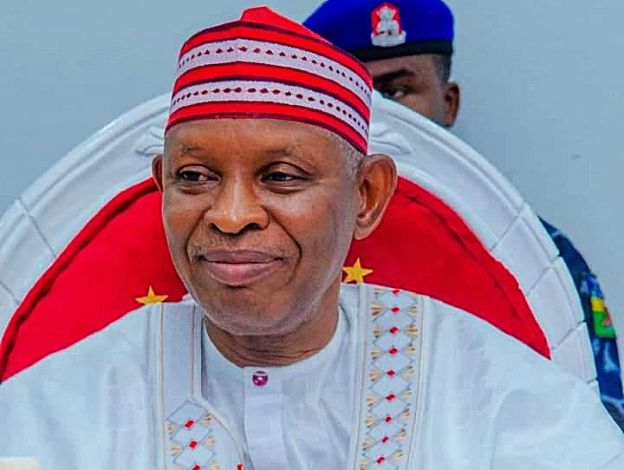
The political history of Governor Abba Kabir Yusuf cannot be discussed without revisiting the controversial 2019 Kano State governorship election, a contest that became one of the most closely fought elections in the state’s history.
In 2019, Abba Kabir Yusuf contested the governorship election on the platform of the Peoples Democratic Party (PDP) against the incumbent, Abdullahi Umar Ganduje of the All Progressives Congress (APC). The election produced an exceptionally narrow margin, with INEC’s final figures showing Ganduje with 1,033,695 votes against Abba Yusuf’s 1,024,713 votes — a difference of only 8,982 votes.
The election was followed by a fierce legal battle. Abba and the PDP challenged the outcome, alleging irregularities surrounding the election and the supplementary poll. The Court of Appeal subsequently affirmed Ganduje’s victory, while the Supreme Court later dismissed Abba’s appeal.
For many of Abba Yusuf’s supporters, however, the 2019 experience was remembered not simply as an electoral defeat but as a demonstration of the enormous influence that political power can exert during elections. They argued that the combination of federal, state and party structures created an uneven political environment for the opposition candidate.
It is important, however, to distinguish political perception from established fact. There is no judicial finding establishing that the Federal Government deliberately denied Abba Yusuf victory in 2019. The official election result and subsequent court judgments recognised Ganduje as the winner. What remains undeniable is that the election generated deep controversy and became a defining chapter in Abba Yusuf’s political journey.
The Irony of Political History
Years later, Abba Yusuf eventually achieved what eluded him in 2019. In the 2023 Kano governorship election, he contested on the platform of the New Nigeria Peoples Party (NNPP) and was declared the winner. He defeated the APC candidate, Nasiru Yusuf Gawuna, with 1,019,602 votes to Gawuna’s 890,705.
His victory marked a dramatic political transformation. The man who had once complained about the influence of powerful political structures against him became the occupant of the Kano Government House.
That transformation is particularly relevant as Nigeria’s political landscape continues to evolve ahead of the 2027 general elections, with politicians and parties increasingly building alliances across state and regional boundaries.
The development has now generated a broader political question: when political actors who once complained about the use of powerful political structures eventually acquire power, do they resist the same system — or become part of it?
That question is particularly relevant to the 2026 Osun governorship election and the political alliances surrounding it.
From Victim of the System to Participant in the System?
The central argument is not that Abba Yusuf should be prohibited from participating in another state’s political affairs. Political parties and elected officials are entitled to campaign, mobilise supporters and defend their political interests within the law.
Rather, the issue is one of political consistency.
If a politician’s political identity was strengthened by the argument that powerful political forces once attempted to overwhelm his electoral mandate, then that politician should be particularly sensitive to the dangers of political overreach when dealing with opponents elsewhere.
The 2019 Kano experience demonstrated how close electoral contests can become when political institutions, party structures and legal processes collide. Abba Yusuf’s own experience showed that an election can continue long after voting ends, with courts ultimately becoming the arena for determining the legitimacy of competing claims.
Nigeria’s electoral system has continued to attract intense scrutiny, particularly over the independence of institutions, electoral transparency and the conduct of political actors. These issues remain central to discussions about Nigeria’s electoral reforms and the 2027 political landscape.
Therefore, as political battles intensify in Osun, the important question should not simply be who supports whom, but whether political actors are committed to the same democratic principles when they are in power as when they are in opposition.
Democracy Should Be Bigger Than Political Revenge
Nigeria’s democracy will become stronger when politicians who have experienced political pressure refuse to reproduce the same culture against others.
Abba Yusuf’s journey — from the defeated PDP candidate in Kano in 2019, through his eventual victory in 2023, to his present position as one of Kano’s most influential political figures — offers a powerful case study in the evolution of political power.
The broader political environment in Kano has also continued to attract attention as new political actors emerge and established parties prepare for future contests. Recent developments involving political mobilisation in Kano show how the state’s political structures remain influential beyond its immediate borders.
That makes the debate over political alliances and cross-state mobilisation even more significant as Nigeria approaches another major electoral cycle.
The Lesson of Kano 2019
The lesson of Kano 2019 should not be forgotten: political power is temporary, but the democratic principles established today can shape the political environment inherited tomorrow.
Those who once complained about a political “gang-up” should be careful not to create another one when the balance of power changes.
Nigeria needs political competition, not political persecution; alliances, not intimidation; and strong institutions, not the domination of institutions by whoever happens to control government at a particular moment.
The country’s political parties will continue to compete for influence ahead of the next election cycle, including the 2027 political contests already taking shape across Nigeria.
The Ultimate Test of Political Leadership
The ultimate test of political leadership is not how effectively one defeats an opponent, but whether one protects the democratic space even when doing so may benefit one’s political rival.
Abba Yusuf’s political journey provides an opportunity to reflect on that principle. Having experienced the pressures of a closely contested election, a prolonged legal battle and eventual political victory, his actions today will inevitably be judged against the standards he and his supporters demanded from the political system in the past.
The question, therefore, is not simply whether Governor Abba Kabir Yusuf has the right to participate in political activities outside Kano. He does. The more important question is whether every political intervention he makes strengthens or weakens the democratic institutions that determine electoral outcomes.
That is the standard that should apply to Abba Yusuf, his political allies, his opponents and every other influential political actor in Nigeria.
As The Bureau Journal continues to follow developments in Nigerian politics, the focus should remain on democratic accountability, credible elections, institutional independence and the right of voters to freely choose their leaders.
Get breaking news and latest updates directly on WhatsApp