


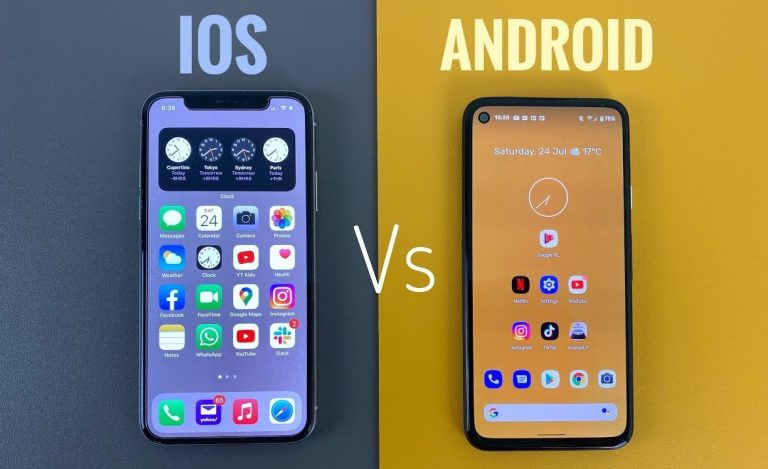
For years, the smartphone debate has largely revolved around two camps: Android users on one side and iPhone users on the other.
Apple’s iPhone has built a powerful reputation for premium design, strong performance, long software support and a tightly integrated ecosystem. But that does not automatically make it the best smartphone platform for everyone.
For users who value flexibility, choice, customisation, hardware variety and control over how their device works, Android offers several advantages that iPhone simply does not match.
And in Nigeria, where smartphone buyers often have to balance price, performance, battery life, storage and network flexibility, those differences can matter.
As smartphones become increasingly important for work, banking, education, business and communication, the question is no longer simply which phone has the bigger brand name. It is about which platform gives users the tools and flexibility they actually need.
Here are some of the biggest reasons why Android can be a better choice than iPhone.
1. Android Gives You More Choice
Perhaps the biggest advantage of Android is choice.
With an iPhone, your options are largely limited to Apple’s product range. Android, on the other hand, powers smartphones from dozens of manufacturers, including Samsung, Google, Xiaomi, OnePlus, Motorola and others.
That means buyers can choose between budget phones, mid-range devices, gaming phones, camera-focused smartphones and ultra-premium flagships.
Whether you have a modest budget or enough money for a premium device, there is likely to be an Android phone designed around your priorities.
That flexibility is particularly important in markets where consumers are highly price-conscious.
The diversity of Android hardware also mirrors a wider trend in technology: consumers are increasingly looking for devices that perform multiple functions rather than simply serving as communication tools. The Bureau Journal’s coverage of how artificial intelligence is changing everyday life illustrates just how deeply technology is becoming integrated into everyday activities.
2. Android Offers More Hardware Innovation
Android manufacturers frequently experiment with smartphone hardware.
Foldable phones, stylus-equipped devices, gaming-focused smartphones, extremely fast charging systems, large camera sensors and unusual form factors have largely been driven by Android manufacturers.
Samsung’s Galaxy Z Fold and Z Flip lines, for example, have pushed foldable smartphones into the mainstream.
Other Android manufacturers have also experimented with technologies such as exceptionally fast wired charging, high-resolution displays and increasingly sophisticated camera systems.
Apple has introduced major hardware innovations of its own, but Android’s multi-manufacturer ecosystem means consumers get exposed to a much broader range of ideas.
For buyers, that means there is rarely a single definition of what a smartphone should be.
3. You Can Customise Android Much More
Android gives users considerably more freedom over the appearance and behaviour of their phones.
Users can change launchers, icon packs, widgets, default applications, home-screen layouts and many other aspects of the interface.
You can make an Android phone look and behave very differently from the way it did when you first switched it on.
iOS has become more customisable over the years, but Apple still maintains tighter control over the operating system.
For people who want their smartphone to feel genuinely personal, Android provides more room to experiment.
That flexibility is increasingly relevant as smartphones become digital workspaces rather than devices used only for calls and text messages.
4. Android Makes File Management Easier
Another major advantage is the way Android handles files.
On many Android devices, users can access folders, move files between locations, rename documents, download files and transfer them directly to a computer without navigating Apple’s more restrictive file-management ecosystem.
This can be particularly useful for students, journalists, photographers, content creators and professionals who regularly work with documents, videos and other files.
Android can function much more like a traditional computer when it comes to managing files.
That matters in an economy where smartphones are increasingly being used for business. The Bureau Journal’s guide on starting a small business in Nigeria with low capital highlights how entrepreneurs can build businesses around little more than a smartphone, digital skills and internet access.
For such users, the ability to manage documents, media and business applications directly from a phone can be more than a convenience.
5. Android Gives You More Freedom With Apps
Android generally gives users greater freedom over where applications come from.
Depending on the device and Android version, users can install applications from sources outside the Google Play Store.
This process, commonly known as sideloading, can be useful when a legitimate application is unavailable through the Play Store or when developers need to distribute software directly.
That freedom also comes with responsibility.
Installing applications from unknown sources can expose users to malware, identity theft and other security risks. Users should therefore verify developers and download applications from trusted sources whenever possible.
The Bureau Journal’s guide to spotting fake mobile apps before downloading them explains some of the warning signs users should watch for when installing applications.
The important distinction is that Android’s greater flexibility does not mean users should abandon basic security precautions.
6. Android Phones Often Offer Better Value
Price is one of Android’s strongest advantages.
Because so many manufacturers compete in the Android market, consumers can find devices offering impressive specifications at significantly different price points.
A mid-range Android phone can provide a high-refresh-rate display, multiple cameras, substantial storage and fast charging without requiring the price of a premium flagship.
The competition between Android manufacturers also puts pressure on companies to offer more features for the money.
This makes Android particularly attractive to buyers who care about specifications and value rather than simply buying into a particular brand.
For Nigerian consumers dealing with changing device prices and household budgets, having several manufacturers competing across different price ranges gives Android an important practical advantage.
7. Android Often Leads in Fast Charging
Fast charging has become an increasingly important smartphone feature, and several Android manufacturers have pushed charging technology aggressively.
Some Android phones can recharge substantially faster than many competing smartphones, reducing the amount of time users need to keep their devices connected to a charger.
For people who use their phones heavily for navigation, video, social media, photography or business, faster charging can make a meaningful difference.
Instead of leaving your phone connected for a long period, a short charging session can provide a substantial amount of additional battery life.
This is particularly useful for people who rely on their smartphones throughout the day and may not always have access to a convenient charging point.
8. Android Gives You More Hardware Features
Android manufacturers have historically been willing to include features that Apple has sometimes avoided or introduced later.
Depending on the manufacturer and model, Android phones may offer features such as:
- Expandable storage
- Dual-SIM functionality
- Stylus support
- USB-C accessories and peripherals
- Desktop-style modes
- Advanced multitasking
- Foldable displays
- Extremely fast charging
- Greater control over default applications
Not every Android phone offers all of these features, of course.
That’s precisely the point: consumers can select a device based on the features that matter most to them.
For a Nigerian buyer who uses different networks for calls and data, for example, dual-SIM functionality may be more valuable than a particular premium design feature.
9. Android Multitasking Is Extremely Powerful
Android is also well suited to people who use their smartphones as productivity devices.
Many Android phones support sophisticated multitasking features, including split-screen applications, floating windows and manufacturer-specific desktop environments.
Samsung’s DeX platform, for example, allows compatible Galaxy devices to provide a desktop-like experience when connected to an external display.
For professionals who want their smartphone to do more than run social-media applications, these capabilities can be extremely useful.
This shift towards smartphones as productivity tools is part of a much broader transformation in how Nigerians use technology. From digital businesses to artificial intelligence and online services, mobile devices increasingly sit at the centre of everyday digital activity.
The Bureau Journal’s technology coverage has similarly examined how Nigeria’s digital infrastructure is evolving through the new national alphanumeric postcode system.
10. Android Isn’t Just One Company’s Vision
Perhaps the most important distinction between the two platforms is philosophical.
Apple controls the iPhone’s hardware, operating system and ecosystem. That gives the company an extraordinary level of control over the user experience.
Android operates differently.
Google develops Android, while numerous manufacturers adapt the platform for their own devices.
The result is an ecosystem where different companies compete on design, cameras, battery life, performance, software features and price.
That competition benefits consumers because there is no single definition of what an Android smartphone should be.
If one manufacturer’s approach does not suit you, another may offer a completely different combination of hardware and software.
Android vs iPhone: The Real Difference
The Android-versus-iPhone debate is often reduced to arguments about which brand is more prestigious or which phone has the better camera.
The deeper difference is about control and choice.
iPhone offers a highly controlled ecosystem where hardware and software are designed to work closely together.
Android offers a more diverse ecosystem where consumers have substantially more choice in hardware, software configuration and price.
Neither approach is universally suitable.
Someone deeply invested in Apple’s ecosystem may value features such as seamless integration between an iPhone, Mac, Apple Watch and other Apple products.
Another user may care more about customisation, fast charging, file management, hardware variety or getting maximum specifications for their money.
For that second group, Android can make more sense.
The decision can also depend on what someone does with their phone. A student may prioritise price and battery life. A content creator may care more about cameras and storage. A business owner may value dual-SIM support and multitasking.
There is no reason every buyer should want the same smartphone.
The Bottom Line
Android’s greatest strength is not that every Android phone is better than every iPhone.
It is that Android gives consumers options.
You can buy an affordable Android phone, a premium flagship, a foldable device, a gaming smartphone or a productivity-focused phone. You can customise the interface, manage your files, choose different hardware and, on supported devices, install software from outside the main app store.
That freedom is what makes Android compelling.
The iPhone remains a powerful and highly refined smartphone platform. But for users who value flexibility, customisation, hardware diversity and control, Android provides an alternative that is difficult to ignore.
For Nigerian students, professionals, entrepreneurs, journalists, creators and everyday smartphone users, the most important question is ultimately not which logo appears on the back of the phone.
It is whether the device gives them the features, flexibility and value they actually need.
And for millions of users, Android’s combination of choice, flexibility and value is exactly what makes the platform worth choosing.
Get breaking news and latest updates directly on WhatsApp
















