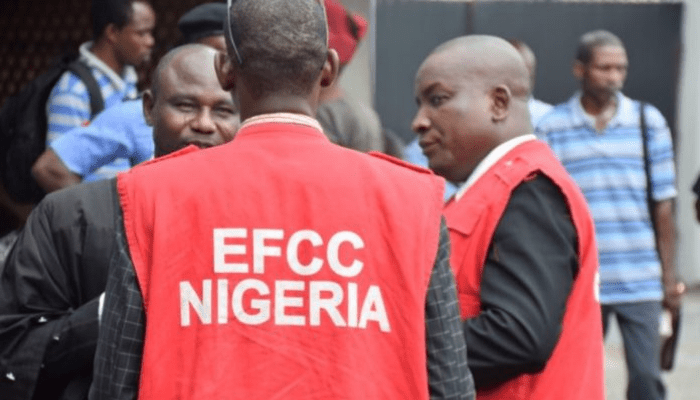
The Economic and Financial Crimes Commission (EFCC) has warned religious leaders against diverting tithes, offerings, zakat and other funds belonging to religious organisations into private businesses.
EFCC Chairman, Ola Olukoyede, issued the warning on Wednesday, September 23, 2026, in Abuja during the 2026 Second Council Meeting of the Nigeria Inter-Religious Council (NIREC).
Olukoyede urged churches, mosques and other faith-based organisations to establish clear regulatory and financial compliance mechanisms to protect money entrusted to them by worshippers and other contributors.
He said religious leaders had a special responsibility to demonstrate integrity because their conduct could influence the behaviour and values of their followers.
EFCC Says Religious Funds Must Be Kept Separate
Olukoyede said religious leaders were free to engage in legitimate private businesses and other vocations, but warned that money belonging to religious organisations must not be mixed with their personal resources.
“You are not supposed to mingle in. That’s nothing that says you can’t do any other vocation. You sell cars, you are a farmer and all of that.
“Don’t mix the money from the purse of your organisation with that of your own personal money. Don’t do that. When money is paid to your organisation, don’t divert it to your business.
“That’s criminal and some of our adherents and followers see some of these things we do,” he said.
The EFCC chairman’s position was that institutional funds should remain distinct from the personal finances and businesses of religious leaders, with organisations putting appropriate systems in place to monitor how contributions are received, held and spent.
Olukoyede Urges Churches and Mosques to Strengthen Compliance
The EFCC chairman called on religious organisations to develop internal compliance structures that can prevent the misuse of funds and strengthen accountability.
He said the fight against financial crime should not be left entirely to law enforcement agencies, arguing that religious institutions could play an important role in preventing corruption by promoting honesty and responsible conduct among their followers.
“The EFCC can investigate a person’s conduct. Faith communities can influence that person’s character,” Olukoyede said, according to reports from the NIREC meeting.
His comments came against the backdrop of the commission’s continuing investigations and prosecutions involving alleged financial crimes. The Bureau Journal recently reported that the EFCC had established a team to investigate individuals linked to reported allegations surrounding the Mambilla Power Project.
EFCC Chairman Criticises Celebration of Unexplained Wealth
Olukoyede also challenged religious institutions to scrutinise the sources of wealth presented to them, particularly where individuals with unexplained wealth are publicly celebrated or honoured in places of worship.
He gave the example of a public servant allegedly constructing an expensive mosque far beyond what could reasonably be supported by the person’s legitimate earnings.
“A public servant says he has built a mosque that is worth more than his earnings in the next 500 years. And you go there to dedicate it. You are dedicating the proceeds of crime,” he said.
The statement was presented as a warning against religious institutions inadvertently providing social or moral legitimacy to wealth whose source has not been established.
Olukoyede’s remarks also place responsibility on religious leaders to ask questions about unusually large donations and projects rather than treating wealth itself as evidence of success or virtue.
EFCC Links Religious Leadership to Anti-Corruption Efforts
The EFCC chairman said faith communities had an important role to play in the country’s anti-corruption campaign because religious leaders could shape attitudes towards honesty, accountability and the use of public and private resources.
He argued that law enforcement could investigate and prosecute financial crimes after they occurred, while religious institutions could contribute to preventing such behaviour by influencing character and social values.
“When the followers know that there is no difference between the money that is meant to propagate the faith that you stand for and your own personal resources, you miss everything together,” Olukoyede said.
The EFCC has also previously drawn attention to financial accountability in religious and pilgrimage-related activities. The Bureau Journal reported in May on the arrest of suspects over an alleged Hajj seat fraud in Kebbi State, after intending pilgrims reportedly discovered irregularities in their pilgrimage arrangements.
EFCC Says Religious Titles Should Not Shield Suspects
The commission’s warning forms part of a broader message from Olukoyede that religious status should not prevent financial crimes from being investigated or prosecuted where evidence supports such action.
Reports from the NIREC meeting said the EFCC chairman disclosed that the commission’s case files include suspects identified by religious titles, with some having been prosecuted and convicted for financial crimes.
The comments reinforce the EFCC’s position that financial crime should be treated according to evidence and applicable law, irrespective of the religious identity or title of a suspect.
That principle is also relevant to ongoing high-profile EFCC cases. The Bureau Journal recently reported competing claims surrounding the EFCC-related proceedings involving former Attorney-General Abubakar Malami, including calls for balanced reporting and respect for due process.
Olukoyede: Religious Leaders Must Lead by Example
The EFCC chairman said religious leaders should ensure that the principles they preach are reflected in their own conduct.
He argued that followers often observe the behaviour of their leaders and may interpret that conduct as an indication of what is acceptable within their communities.
For that reason, he said religious institutions should promote financial transparency alongside their spiritual responsibilities.
The message extends beyond the handling of tithes, offerings and zakat to the broader question of how religious communities respond to wealth, particularly when the source of that wealth is unclear.
NIREC Meeting Focuses on Faith and National Integrity
Olukoyede delivered the warning at the 2026 Second Council Meeting of NIREC, held under the theme, “Shared Sacred Flourishing in Nigeria.”
The meeting brought together representatives of Nigeria’s major religious communities to discuss issues affecting the country and the role of faith leaders in promoting peace, integrity and responsible citizenship.
The EFCC also used the engagement to encourage religious leaders to deploy their influence in strengthening the country’s anti-corruption campaign. Channels Television reported that the commission also presented an inter-faith anti-corruption manual to religious bodies during the event.
Accountability Extends to Pilgrimage Funds
The issue of accountability is particularly relevant to religious activities involving large amounts of public or privately contributed funds, including pilgrimage programmes.
The Bureau Journal recently reported that Kebbi had remitted ₦21.5 billion to the National Hajj Commission of Nigeria ahead of the 2027 Hajj, with thousands of intending pilgrims registered for the pilgrimage.
Such programmes involve substantial financial transactions and therefore require clear records, transparent payment channels and effective oversight to protect pilgrims and public funds.
The earlier Hajj fraud case reported by The Bureau Journal similarly demonstrated how individuals can exploit pilgrimage arrangements for financial gain, with police recovering materials allegedly used to make fraudulent transactions appear legitimate.
EFCC Warns Against Moral Cover for Corruption
Olukoyede’s comments ultimately placed the anti-corruption responsibility beyond government offices and law enforcement agencies, extending it to institutions with significant influence over Nigerian society.
His warning was not that religious leaders should be prevented from owning businesses or engaging in legitimate commercial activities. Rather, he stressed the need for a clear separation between those private ventures and funds belonging to religious organisations.
The EFCC’s position is that contributions made to churches, mosques and other faith-based organisations should be managed for the purposes for which they were entrusted, while personal businesses should be financed from legitimate personal resources.
As the commission continues its wider financial-crime enforcement activities, religious institutions are being urged to strengthen internal controls, scrutinise financial transactions and ensure that religious status does not become a substitute for accountability.
The warning also comes as the EFCC continues to face scrutiny over its handling of high-profile investigations. The Bureau Journal has reported both the commission’s ongoing investigations and competing claims surrounding some of its cases, including calls for fairness and due process.
Olukoyede’s central message at the NIREC meeting was that the fight against corruption requires not only investigations and prosecutions, but also stronger ethical standards within institutions that shape public behaviour.
Get breaking news and latest updates directly on WhatsApp