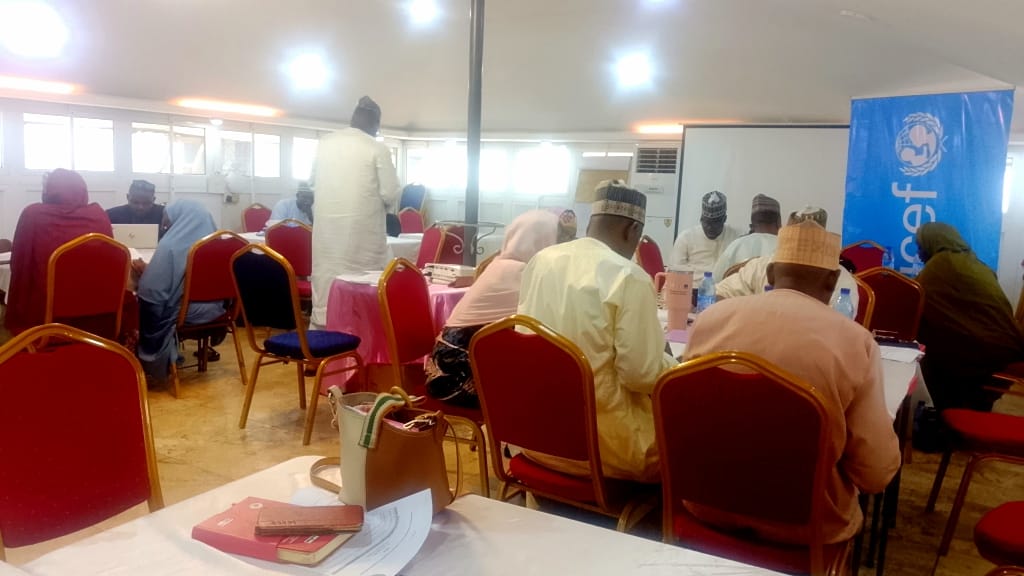
The Kebbi State Government and the United Nations Children’s Fund (UNICEF) have begun validating a Sexual and Reproductive Health (SRH) Social and Behaviour Change (SBC) Strategy designed to improve maternal, newborn, adolescent and child health outcomes across the state.
The validation meeting brings together government officials, development partners, traditional and religious institutions, healthcare providers, civil society organisations, community representatives, the media and academia to review and strengthen the draft strategy.
UNICEF Identifies Key Factors Behind Poor Health Outcomes
Mr Ibrahim Haruna, UNICEF Specialist at the Sokoto Field Office, said the strategy was being developed against the backdrop of poor maternal, newborn and child health indicators in Kebbi.
Haruna said neonatal and under-five mortality remained major concerns, describing them as part of the wider challenges confronting maternal, newborn and child health in the state.
He said the situation required coordinated action by the government, development partners, communities and other stakeholders rather than isolated interventions.
According to him, negative socio-cultural practices, household and gender norms, weaknesses within the health system and difficulties accessing healthcare services were among the factors contributing to poor health outcomes.
Haruna stressed the need for sustained social and behavioural change interventions capable of addressing the underlying factors that influence whether women, adolescents and families use available healthcare services.
The strategy discussions come as UNICEF and stakeholders across Kebbi continue to focus on improving the wellbeing of women and children. The Bureau Journal previously reported on a UNICEF-backed development planning process involving Kebbi, Sokoto and Zamfara, which also placed stronger evidence-based interventions among its priorities.
Kebbi Health Commissioner Seeks Stronger Community Action
The Kebbi Commissioner for Health, Alhaji Samaila Yakubu-Augie, appreciated UNICEF and other development partners for their contributions to healthcare delivery in the state.
Yakubu-Augie also commended stakeholders at the ward, local government and state levels for their efforts to strengthen the health sector.
He urged those responsible for promoting social and behavioural change to intensify their work and ensure that the objectives of the validation meeting translate into practical action in communities.
“We thank UNICEF and all other partners in the state for their efforts in the health sector.
“We appreciate all that has been done by stakeholders from the ward, local and state levels.
“When we get back to our communities, those saddled with the responsibility of social and behavioural change should step up further to ensure that the aims and objectives of what we want to achieve at the end of this meeting are achieved,” he said.
Strategy Targets Harmful Practices, Access Barriers
The Executive Secretary of the Kebbi State Primary Healthcare Development Agency (KBPHCDA), Alhaji Abubakar Muhammad, said the meeting was designed to produce a context-specific and evidence-based SBC strategy for the state.
Muhammad said the strategy would promote better sexual and reproductive, maternal, adolescent and child health practices across Kebbi.
He explained that stakeholders were reviewing and validating a draft developed through a co-design process involving government institutions, development partners, civil society organisations, communities and academia.
According to him, the validated strategy will subsequently be adopted and forwarded to the Governor of Kebbi State for approval.
Muhammad said the strategy is expected to address harmful traditional practices, socio-cultural and gender norms, as well as structural barriers that prevent women, adolescents and children from accessing quality health services.
The approach is particularly relevant to primary healthcare, where access, community participation and continuity of care can directly affect health outcomes. A recent The Bureau Journal investigation into challenges at primary healthcare centres in Kano highlighted how seemingly basic system gaps can affect the delivery and continuity of healthcare services.
Stakeholders Asked to Shape Practical Solutions
Muhammad said the participation of stakeholders from different sectors was critical to ensuring that the strategy reflects the realities, needs and priorities of communities across Kebbi State.
He urged participants to contribute meaningfully to the validation process so that the final document would provide practical and sustainable responses to the challenges identified.
The meeting brought together representatives from government ministries, departments and agencies, traditional and religious institutions, healthcare providers, civil society organisations, the media and academic institutions.
The broad participation reflects the strategy’s focus on changing behaviours and social practices that can influence healthcare decisions at household and community levels.
UNICEF Support Continues Across Kebbi Health Sector
UNICEF has supported several health and nutrition interventions in Kebbi, including programmes targeting vulnerable children.
In June, The Bureau Journal reported that UNICEF donated 10,500 cartons of Ready-to-Use Therapeutic Food to Kebbi to support the treatment of children suffering from severe acute malnutrition across 11 local government areas.
The intervention targeted child malnutrition, another major factor affecting child survival and development in vulnerable communities.
UNICEF-related health interventions in the North-West have also included community-focused initiatives. The Bureau Journal’s UNICEF coverage provides further reporting on programmes involving health, nutrition, women and children across the region.
For broader coverage of healthcare policy, public health and medical developments, readers can also follow The Bureau Journal’s Health section.
Validation Meeting Expected to Produce Final Strategy
The validation exercise is expected to culminate in the adoption of recommendations and refinement of the Social and Behaviour Change Strategy for implementation in Kebbi State.
Once approved, the strategy is expected to provide a framework for addressing behavioural, social and structural factors affecting access to sexual, reproductive, maternal, newborn, adolescent and child health services.
The emphasis on community realities and evidence-based interventions is intended to ensure that the final strategy is practical and capable of supporting sustained improvements in health outcomes across Kebbi.
Get breaking news and latest updates directly on WhatsApp