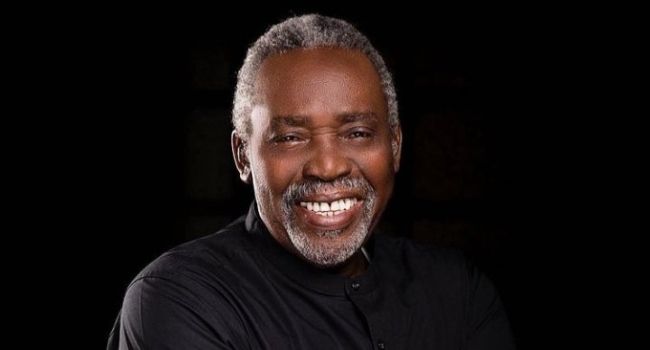
Veteran Nigerian actor and film executive, Oludotun Baiyewu Jacobs, popularly known as Olu Jacobs, has died at the age of 84.
The death of the celebrated actor was announced by his son, Olusoji Jacobs, in a statement shared on Instagram on Wednesday, September 16, 2026.
In the family announcement, Olusoji described his father as “The Lion of Lufodo” and expressed gratitude to God for his life, career and legacy.
“It is with gratitude to God for a life well lived and fought, that we announce the passing of our dear husband, father, grandfather and uncle. The Lion of Lufodo,” the statement said.
The family identified him as Oludotun Baiyewun Jacobs (MFR) and gave his dates as July 11, 1942 to September 16, 2026.
The family also appealed to bloggers, social media influencers and members of the public to respect their privacy as they mourn the veteran actor.
“We call on all bloggers and social media influencers to respect our families privacy at this time,” Olusoji said.
Olu Jacobs’ Death Closes a Remarkable Chapter in Nigerian Theatre and Film
For generations of Nigerians and African film audiences, the name Olu Jacobs was associated with a particular kind of acting: measured, authoritative and unmistakably theatrical.
His career stretched across stage, television and film, taking him from British theatre and television productions to some of the most recognisable productions in Nigeria’s entertainment industry.
According to Lufodo Group, which he co-founded with his wife, fellow actress Joke Silva, Jacobs’ professional career spanned about five decades and included work with organisations and productions in Britain, the United States and Nigeria. The company also identifies him as the executive chairman of the Lufodo Group, which includes Lufodo Productions, Lufodo Distributions and the Lufodo Academy of Performing Arts.
His death therefore represents not only the loss of a veteran screen actor but also the passing of one of the figures whose career bridged different eras of Nigerian theatre and cinema.
From RADA to the Nigerian Screen
Jacobs received professional acting training at the Royal Academy of Dramatic Art in London, commonly known as RADA.
He subsequently worked with theatre companies in Britain and appeared in British television productions and international films before returning to Nigeria, where he became one of the country’s best-known actors.
His international credits included appearances in productions such as The Goodies, Till Death Us Do Part, The Professionals, The Tomorrow People, The Dogs of War, Pirates and Baby: Secret of the Lost Legend.
But it was his work in Nigeria that firmly established him as one of the country’s most recognisable acting figures.
He appeared across television, stage and film and became particularly associated with commanding roles, including kings, traditional rulers, political figures and other authoritative characters.
The ‘Lion of Lufodo’
The description used by his family on the day of his death — “The Lion of Lufodo” — carries a particular significance.
Jacobs and Joke Silva built Lufodo into a wider creative enterprise extending beyond acting. The Lufodo Group includes film production and distribution interests as well as the Lufodo Academy of Performing Arts, reflecting the couple’s involvement in the development and training of performers.
Through that work, Jacobs’ influence extended beyond the characters he portrayed on screen.
He was also involved in stage productions and professional theatre, maintaining a connection with the discipline from which his acting career emerged.
A Career That Spanned Generations
One of the defining features of Jacobs’ career was its longevity.
He was already an established theatre and television performer before the Nigerian film industry entered the period of rapid expansion that would eventually make the name “Nollywood” known around the world.
He subsequently became part of that transformation, appearing in numerous Nigerian productions and working alongside several generations of actors.
Lufodo’s official biography says his body of work includes more than 300 movies in Nigeria, alongside stage, film and radio work with organisations including the BBC, National Theatre, Royal Shakespeare Company and major international film companies.
His career consequently crossed the boundaries between traditional theatre, television, international cinema and modern Nigerian film.
Honours and Recognition
Jacobs’ contribution to acting was recognised with several major awards and honours during his lifetime.
He won the Africa Movie Academy Award for Best Actor in a Leading Role in 2007 and received the Industry Merit Award at the Africa Magic Viewers’ Choice Awards in 2013. He was also honoured with a lifetime achievement award in 2016.
In 2011, he was conferred with the national honour of Member of the Order of the Federal Republic (MFR) in recognition of his contribution to Nigeria.
Those recognitions reflected a career that had already become deeply embedded in the history of Nigerian entertainment.
Olu Jacobs and Joke Silva
Beyond his professional career, Jacobs was also part of one of Nigeria’s most recognised acting partnerships with his wife, Joke Silva.
The couple worked together professionally and established Lufodo, building an enterprise around theatre, film production, distribution and training.
Their partnership became one of the enduring stories within Nigeria’s creative industry, with both actors maintaining prominent careers while contributing to the development of younger talent.
Jacobs’ family statement described him as a husband, father, grandfather and uncle, while asking the public to allow the family to mourn privately.
A Legacy Beyond the Screen
Olu Jacobs’ significance to Nigerian entertainment cannot be measured only by the number of films in which he appeared.
His career connected Nigeria’s contemporary film industry to an older tradition of professional theatre and stagecraft.
He belonged to a generation of Nigerian performers whose training and experience extended beyond the emerging home-video industry, bringing theatre discipline, voice control, stage presence and character development into film and television.
His influence also extended into training and production through Lufodo and the Lufodo Academy of Performing Arts.
For younger actors who encountered him on screen or through the wider Nigerian theatre and film community, Jacobs represented a professional tradition that had developed over decades.
The End of an Era for Nollywood
The death of Olu Jacobs comes as Nigeria’s entertainment industry continues to evolve from the traditional theatre and early television era into a global streaming and film market.
Jacobs experienced almost every stage of that transformation.
He began his professional career in Britain, returned to Nigeria, established himself in television and film, and remained a recognisable figure as Nollywood developed into one of Africa’s most prominent creative industries.
His passing therefore closes a significant chapter in the history of Nigerian acting.
It also leaves behind an extensive body of work that will continue to introduce his performances to audiences who were not yet born when he first appeared on stage.
Family Appeals for Privacy
As tributes begin to emerge following his death, the family has specifically asked bloggers, influencers and members of the public to respect its privacy.
The appeal is particularly significant in an era when news of celebrity deaths can spread rapidly across social media.
The family’s announcement provides the confirmation of Jacobs’ death while also making clear that his loved ones want space to grieve.
Olu Jacobs was 84.
He leaves behind a career that crossed continents, generations and multiple forms of entertainment — from British theatre and television to Nigerian stage productions and Nollywood.
For Nigerian cinema, his name will remain attached to an era in which acting was shaped not only by the camera but also by the discipline of the stage.
Oludotun Baiyewun Jacobs, “The Lion of Lufodo,” died on September 16, 2026, at the age of 84.
Get breaking news and latest updates directly on WhatsApp