
By Ibrahim A. Jombali
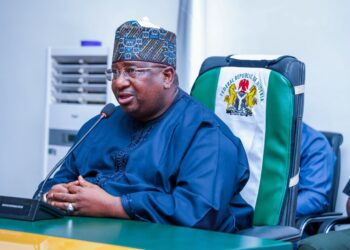
In politics, headlines often celebrate dramatic speeches, campaign rallies and electoral victories. History, however, tends to remember leaders whose impact is measured by the lives they improve rather than the noise they generate. This distinction forms the basis of growing conversations around Governor Nasir Idris’ leadership in Kebbi State.
Across many democracies, public trust has become one of the rarest and most valuable political assets. Unlike campaign promises or political alliances, trust cannot be manufactured overnight. It is earned gradually through consistent governance, responsible leadership and the visible delivery of projects and policies that improve the welfare of citizens.
Supporters of Governor Nasir Idris argue that his administration has steadily built this confidence by focusing on governance rather than political theatrics. They believe the administration’s emphasis on infrastructure development, agriculture, education, healthcare and rural development has strengthened public confidence across Kebbi State.
Governance Beyond Political Rhetoric
For many residents, governance is ultimately judged by tangible outcomes rather than campaign rhetoric. Roads, schools, hospitals, agricultural interventions and improved public institutions often leave a more lasting impression than political slogans.
Supporters maintain that Governor Idris has prioritised practical governance by implementing projects aimed at improving the living conditions of ordinary citizens while strengthening public institutions across the state.
They argue that this approach has gradually shifted public discourse from political promises to measurable performance, with citizens increasingly evaluating leadership based on visible results.
Building Confidence Through Public Service
Political leadership is fundamentally built on public trust. Citizens elect leaders with the expectation that public resources will be managed responsibly and that government policies will serve the collective interest.
According to supporters of the governor, the administration has demonstrated a leadership style characterised by accessibility, moderation and a commitment to fulfilling campaign promises through practical governance.
They contend that each completed project and fulfilled commitment has contributed to strengthening the relationship between government and the people.
Agriculture and Rural Development Remain Central
As an agrarian state, Kebbi’s economy depends heavily on agriculture. Supporters note that the administration has continued to prioritise agricultural development alongside investments in education, healthcare and rural infrastructure.
They believe these initiatives are not only addressing current challenges but are also laying the foundation for sustainable economic growth and improved livelihoods across communities.
Political Stability as a Development Tool
Political stability remains an important factor in attracting investment and sustaining development. Stable institutions create an environment where businesses can grow, communities can thrive and government programmes can be implemented effectively.
Supporters believe the administration’s emphasis on maintaining peace and stability has created favourable conditions for development across Kebbi State.
They argue that continuity in governance should be viewed not merely from a political perspective but also as a strategy for sustaining developmental gains.
Constructive Criticism and Democratic Accountability
No democratic government is beyond public scrutiny. Constructive criticism remains an essential element of democratic governance, helping leaders improve policies and remain accountable to the people.
Supporters acknowledge that every administration faces challenges and competing expectations. However, they insist that political debates should also recognise measurable achievements where they exist.
According to them, elections should ultimately be decided by competing records of performance and alternative visions for the future rather than political rhetoric alone.
Leadership Rooted in Public Confidence
Many supporters describe Governor Idris as a leader who engages with communities during periods of hardship and demonstrates empathy in governance.
They believe this leadership style has strengthened the relationship between government and citizens while reinforcing confidence in public institutions.
Increasingly, they argue, political discussions in Kebbi are shifting away from personalities towards governance outcomes, with greater attention being paid to the practical impact of leadership.
Looking Ahead
As Kebbi State moves closer to another electoral cycle, political campaigns and competing narratives are expected to intensify. Democratic competition will naturally provide opportunities for parties and candidates to present different visions for the future.
Supporters of Governor Nasir Idris, however, maintain that public trust remains his greatest political asset. They argue that the confidence built through governance and service delivery provides a stronger foundation than campaign messaging alone.
Ultimately, they believe the decision rests entirely with the electorate, whose daily experiences will determine the future direction of Kebbi State.
While political popularity may fluctuate, they contend that enduring public trust remains the strongest pillar upon which lasting democratic leadership is built.
Get breaking news and latest updates directly on WhatsApp