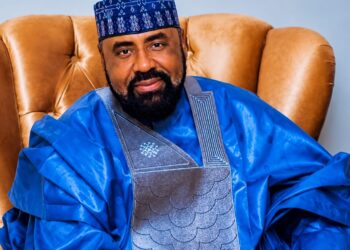
KADUNA — The Kaduna State Government has defended its investment in education after the African Democratic Congress (ADC) governorship candidate, Alhaji Isa Mohammed Ashiru, criticised Governor Uba Sani’s record in the sector.
Kaduna State Commissioner for Information and Culture, Malam Ahmed Maiyaki, said Ashiru had the right to scrutinise the administration but should base his criticism on accurate and verifiable figures.
“Ashiru has the right to criticise the government. But when a governorship candidate gets important facts about education funding wrong, he needs a little lesson,” Maiyaki said in a statement.
Maiyaki Disputes Ashiru’s Claim on UNESCO Education Benchmark
The commissioner specifically challenged Ashiru’s interpretation of the international benchmark for education spending.
According to Maiyaki, the Education 2030 Framework for Action recommends that governments allocate at least four to six per cent of gross domestic product (GDP), or 15 to 20 per cent of total public expenditure, to education.
He argued that Kaduna State’s allocations have exceeded the 15 to 20 per cent public-expenditure benchmark in recent years.
Maiyaki said education received 25 per cent of Kaduna State’s budget in 2024, 26.14 per cent in 2025 and another 25 per cent in the approved 2026 budget.
Independent reports confirm that Governor Uba Sani signed the N985.9 billion 2026 Kaduna State budget into law, with education receiving the largest sectoral allocation of 25 per cent.
Based on the total budget, 25 per cent represents approximately N246.5 billion earmarked for education.
Kaduna Education Budget Hits N246.5 Billion in 2026
The 2026 allocation makes education one of the dominant priorities in Kaduna’s fiscal plan.
The approved budget provides N698.9 billion, representing 70.9 per cent, for capital expenditure, while recurrent expenditure stands at N287 billion. Education and infrastructure each received 25 per cent of the overall budget.
Maiyaki said the sustained allocation demonstrates the administration’s emphasis on human capital development and is responsible for improvements the government says have been recorded across basic, tertiary, technical and vocational education.
However, the budgetary allocation is an appropriation rather than proof that the entire amount has already been spent. Actual implementation and expenditure remain important measures when assessing the impact of education funding.
Out-of-School Children Figure Falls to 187,719
One of the key figures cited by the Kaduna Government in defending its education policies is the reduction in the number of children outside the formal school system.
Maiyaki said the number had fallen from more than 550,000 to 187,719 within three years, attributing the change to sustained investment, enrolment campaigns and improved educational infrastructure.
Recent data released by the Kaduna State Government provides a current figure of 187,719 out-of-school children across the state’s 23 local government areas. The 2025/2026 Annual School Census and Out-of-School Children Mapping exercise covered more than 360,000 households and was designed to provide more reliable data for education planning.
The government has said poverty remains the leading barrier to school enrolment, with more than 91 per cent of affected households identifying poverty as a major reason children remain out of school.
The latest figure should therefore be understood as the result of a detailed mapping exercise rather than simply a continuation of earlier estimates. Officials have described the new data as a shift from broad estimates to household-level evidence.
Government Links Education Investment to Enrolment Gains
The Kaduna Government has linked its education spending to measures including free basic education, school feeding programmes, lower tuition fees in state-owned tertiary institutions and interventions aimed at returning children to classrooms.
According to the state government, tertiary enrolment has also increased significantly, while the Reaching Out-of-School Children (ROOSC) programme is being used to support targeted interventions.
ROOSC Project Coordinator Ezra Angai said the programme had already returned more than 25,000 children to learning and is working towards enrolling 100,000 children over four years.
Technical and Vocational Education Gets Attention
Maiyaki also highlighted the administration’s investment in technical and vocational education.
He said the National Board for Technical Education (NBTE) had approved three technical and vocational training centres established by the Uba Sani administration, describing them as among the best-equipped skills acquisition centres in the country.
The commissioner said the state’s experience was also contributing lessons to wider national efforts aimed at expanding technical and vocational education and addressing the out-of-school children challenge.
Technical and vocational education has become an increasingly important component of Nigeria’s human-capital strategy as governments seek to equip young people with employable and entrepreneurial skills beyond conventional university education.
Maiyaki Defends Uba Sani’s Support for KASU
The commissioner also responded to concerns surrounding funding and staff welfare at Kaduna State University (KASU).
Maiyaki said the Uba Sani administration had released more than N800 million for staff welfare and approximately N146 million to settle withheld salaries and other outstanding obligations involving students.
He added that the state provides KASU with a monthly allocation of N50 million.
According to the commissioner, the government provided more than N200 million for the university’s operational needs in 2026, alongside more than N300 million for accreditation of 57 academic programmes and assessment of 60 postgraduate programmes.
He said the interventions contributed to the full accreditation of seven professional programmes and KASU’s Centre for Continuing Education.
Kaduna Government Says N1.6bn Has Gone Into Scholarships
Maiyaki further disclosed that the state government had spent more than N1.6 billion on scholarships and other student-support programmes.
He said the administration had also reduced tuition fees by 50 per cent across the state’s tertiary institutions as part of measures aimed at improving access to higher education.
The commissioner presented the interventions as evidence that the administration’s education policy extends beyond infrastructure and budgetary allocations to student welfare, institutional accreditation and affordability.
Commissioner Challenges Claim of 200 KASU Lecturers Resigning
Maiyaki also rejected claims that nearly 200 lecturers, including professors, had resigned from KASU because of poor working conditions.
He challenged those making the allegation to provide specific evidence, including the names of the lecturers involved, their dates of resignation and the reasons cited for leaving the university.
“Those making the claim should provide the names of the 200 lecturers allegedly involved, the dates they resigned and the reasons they gave for leaving. Repeating an allegation does not make an unverified claim true,” he said.
The commissioner acknowledged the role of the Academic Staff Union of Universities (ASUU-KASU) in advocating for its members and said the government remained open to dialogue over outstanding issues.
Government Rejects Automatic Adoption of Federal ASUU Agreements
On demands for the implementation of Federal Government-ASUU agreements within Kaduna’s state-owned universities, Maiyaki said the issue could not be resolved through political statements alone.
He argued that incorporating federal agreements into the legal and administrative framework governing state-owned universities would require a detailed review of the relevant legal, financial and institutional implications.
“It requires serious legal, financial and institutional review, not noisy politics,” he said.
Education Funding Emerges as 2027 Political Issue
The dispute between Ashiru and the Kaduna State Government comes as education is emerging as an important issue in the political conversation ahead of the 2027 elections.
The competing claims illustrate two different ways of assessing government performance: budgetary commitment on one hand and measurable outcomes, institutional conditions and actual expenditure on the other.
While Kaduna’s 2026 budget clearly allocates 25 per cent to education, recent education data also show that 187,719 children remain outside the formal school system.
This means the central policy challenge for the state is not only how much money is allocated to education, but also how effectively the funds translate into improved access, learning outcomes, teacher welfare, infrastructure and affordable tertiary education.
What the Figures Show
- 2026 Kaduna budget: N985.9 billion.
- Education allocation: 25 per cent.
- Approximate education allocation: N246.5 billion.
- Current mapped out-of-school children: 187,719.
- Local government areas covered: 23.
- Households covered by the mapping exercise: More than 360,000.
- Capital expenditure in the 2026 budget: N698.9 billion, or 70.9 per cent.
- Reported KASU monthly allocation: N50 million.
Bottom Line
Kaduna State Government has strongly defended Governor Uba Sani’s education record, citing sustained budgetary allocations, efforts to reduce the out-of-school population, support for KASU and investment in technical and vocational education.
Ashiru’s criticism, as reported by the state government, has prompted a detailed response from Commissioner Ahmed Maiyaki, who insists that political scrutiny should be based on verifiable figures.
With education likely to remain a major issue ahead of the 2027 Kaduna governorship contest, the debate is expected to shift increasingly towards measurable outcomes, transparency in spending, teacher welfare, tertiary education standards and the state’s ability to bring the remaining 187,719 out-of-school children into classrooms.
Get breaking news and latest updates directly on WhatsApp