

By Emmanuel Odekina Iyede
A strange story has been making the rounds online, and it has all the ingredients of a viral internet sensation: a precise date, a mysterious scientific explanation, an alleged secret project, a reference to NASA, and a prediction of catastrophe.
The claim is that Earth will somehow lose its gravitational pull for seven seconds on August 12, 2026.
According to versions of the rumour circulating on social media, the supposed event could cause people and objects to become temporarily weightless, with some posts going as far as predicting widespread destruction and mass casualties. Other versions attach the story to an alleged secret NASA initiative called “Project Anchor.”
It is an extraordinary claim.
It is also false.
There is no credible scientific evidence that Earth will suddenly lose its gravity for seven seconds on August 12, 2026. The date is real, but the event being described in the viral posts is not.
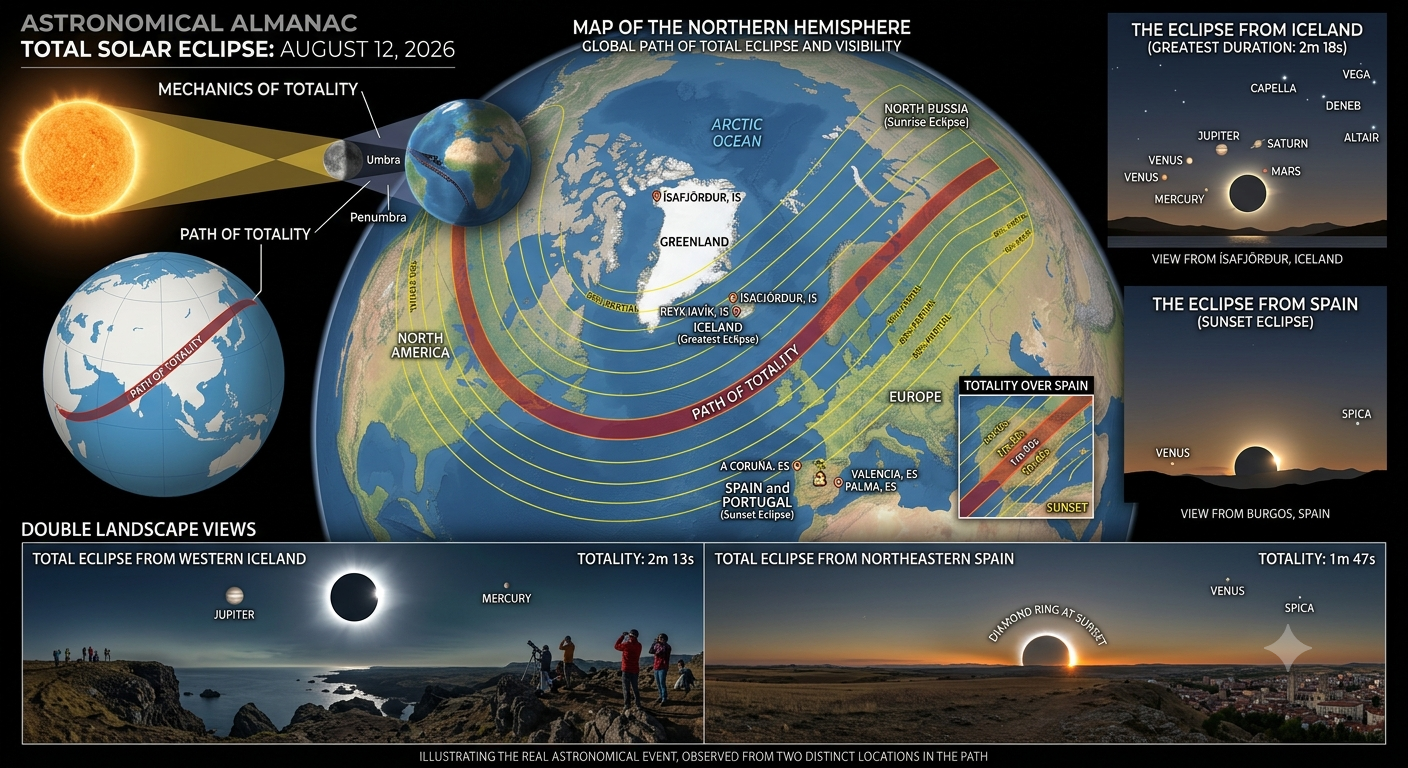
What is actually scheduled for that day is a major astronomical event: a total solar eclipse. NASA’s published eclipse information shows that the Moon’s shadow will cross parts of Greenland, Iceland, northern Russia, the Atlantic Ocean, Spain and a small part of Portugal, while a partial eclipse will be visible across much wider areas, including parts of Europe, Africa and North America.
Somewhere along the way, a real astronomical event appears to have been mixed with an entirely unsupported story about gravity, producing a fake frenzy that has travelled across the internet.
Reality Check: Earth is not expected to lose its gravitational pull for seven seconds on August 12, 2026. The real event associated with that date is a predictable solar eclipse.
Table of Contents
- What the Viral Claim Says
- The Real Event on August 12, 2026
- Why Earth Cannot Simply “Lose Gravity”
- The Story Behind “Project Anchor”
- Why the Rumour Became So Convincing
- The Bigger Problem With Viral Science Misinformation
- How to Fact-Check the Next Viral Science Claim
- The Bottom Line
- Frequently Asked Questions
What the Viral Claim Says
The story circulating online is built around a simple but frightening idea: for approximately seven seconds, something will happen to Earth that will cause gravity to disappear or become temporarily ineffective.
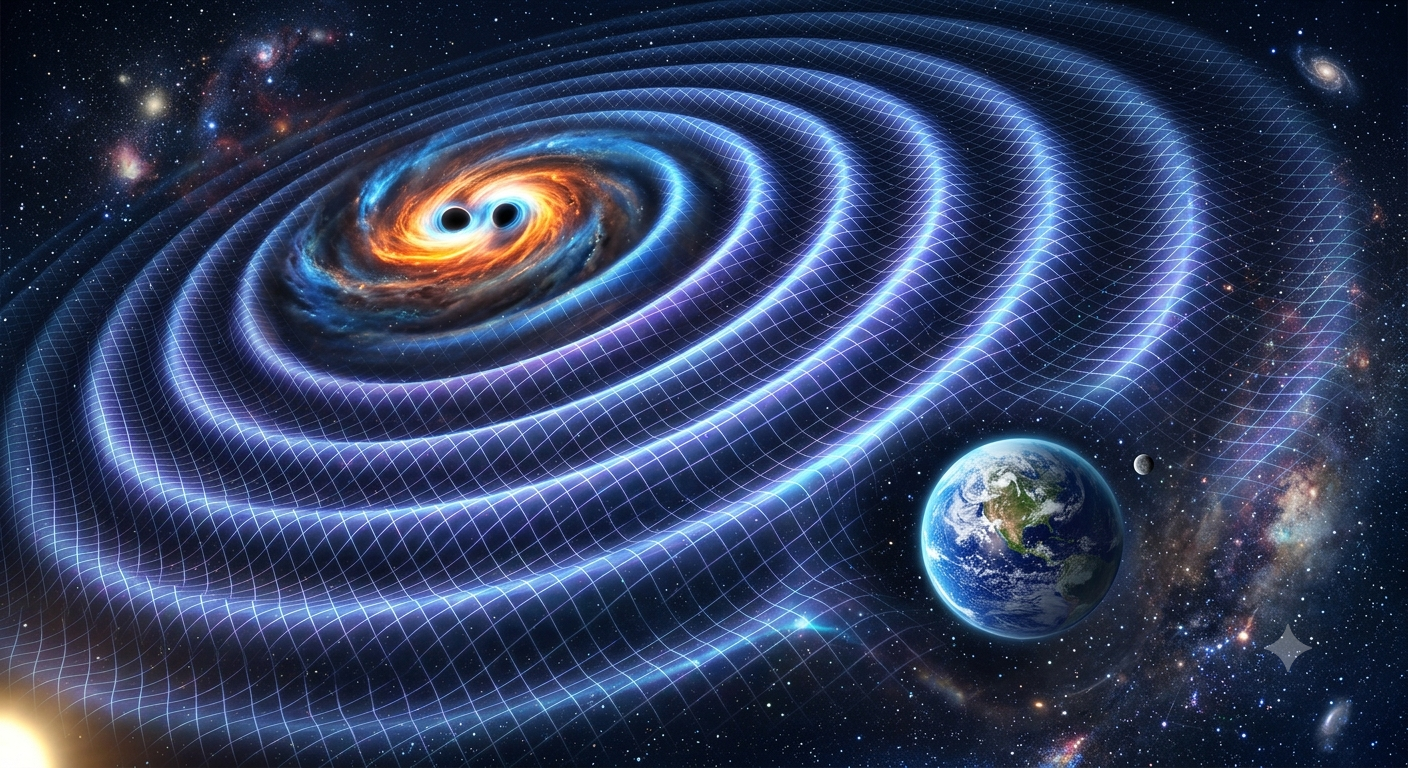
The exact wording varies from one post to another. Some versions claim that the event will be caused by an unusual alignment of celestial bodies. Others mention gravitational waves, black holes or an unexplained cosmic disturbance.
There are also claims that the supposed event will occur at a specific time and that its consequences could include people being lifted from the ground, vehicles being thrown into the air and buildings suffering structural damage.
Such claims may sound convincing to someone unfamiliar with physics, particularly because they use scientific terms that are real. But the presence of scientific vocabulary does not make a scientific claim valid.
The central question is much simpler: Is there evidence that Earth’s gravity is going to disappear?
The answer is no.
There is no credible scientific evidence supporting the prediction of a seven-second global loss of gravity on August 12, 2026.
The Real Event on August 12, 2026
The date at the centre of the rumour is significant for a completely different reason.
On August 12, 2026, a total solar eclipse will occur.
A solar eclipse happens when the Moon passes between the Earth and the Sun, causing the Moon’s shadow to fall across part of Earth’s surface. During a total solar eclipse, observers within the narrow path of totality can see the Moon completely cover the bright face of the Sun for a short period.
NASA’s current information identifies August 12, 2026, as the date of the next total solar eclipse. Totality will cross Greenland, Iceland, the Atlantic, Spain and parts of northern Russia, while a partial eclipse will be visible over a much broader area.
This is a genuine astronomical event that scientists have been able to predict using established knowledge of the movements of the Earth, Moon and Sun.
That predictability is important.
Scientists know when eclipses will occur because the movements of celestial bodies can be calculated with extraordinary precision. The eclipse is not a mysterious event that scientists are suddenly discovering. It is part of a predictable pattern of celestial mechanics.
NASA is also preparing scientific research around the 2026 eclipse. According to NASA, research teams will use aircraft and scientific balloons to study the Sun and changes in Earth’s atmosphere during the temporary darkness created by the eclipse.
In other words, the real story surrounding August 12 is about scientific observation and research—not a planet-wide emergency.
Important Distinction: A solar eclipse temporarily blocks sunlight in certain locations. It does not switch off Earth’s gravity.
Why Earth Cannot Simply “Lose Gravity”
To understand why the rumour is so implausible, it helps to understand what gravity actually is.
Gravity is one of the fundamental forces of nature. At the most basic level, massive objects attract one another. Earth’s enormous mass gives it a gravitational field that keeps people, buildings, oceans and the atmosphere bound to the planet.
That gravitational field is not something that operates like a light switch that can simply be turned off for seven seconds.
The Earth’s gravity is a consequence of the planet’s mass and the distribution of that mass. A temporary solar eclipse does not remove Earth’s mass. The Moon does not suddenly stop being the Moon, and the Earth does not suddenly stop being the Earth.
There are, of course, tiny variations in gravitational acceleration from one location to another. Scientists can measure these differences, and factors such as altitude and the distribution of mass beneath the Earth’s surface can influence local gravitational measurements.
But those natural variations are completely different from the dramatic scenario described in the viral posts.
The idea that the entire planet could suddenly become effectively weightless for exactly seven seconds requires a mechanism that the rumour does not scientifically establish.
This is where the story falls apart.
The Story Behind “Project Anchor”
One of the most striking details in some versions of the rumour is the alleged existence of a secret NASA programme called “Project Anchor.”
Posts circulating online have presented the supposed project as evidence that government scientists already know about the coming gravitational event. Some versions claim that a secret document was leaked and that the programme was created to protect humanity from the consequences of the predicted anomaly.
The story may sound more credible because it contains the familiar ingredients of an official document: a project name, an alleged government agency, a supposed budget and references to scientific research.
But a document being described as “leaked” does not make it authentic.
Nor does placing the name of NASA in a social media post prove that NASA produced or endorsed the information.
There is no credible evidence establishing that NASA has a secret “Project Anchor” designed to prepare for a temporary disappearance of Earth’s gravity. The alleged programme is part of the viral narrative, not an established scientific fact.
This is an important distinction in the age of social media. People often encounter screenshots of supposed official documents without knowing who created them, where they originated or whether the organisation named in them has ever acknowledged them.
A convincing-looking document is not automatically an authentic document.
Why the Rumour Became So Convincing
The success of this particular rumour says as much about the modern information environment as it does about people’s fascination with space.
The story combines a real event with an imaginary one.
The real event is the August 12 solar eclipse. The imaginary event is the supposed loss of gravity.
That combination is powerful because the real part gives the false part a sense of legitimacy.
Someone who searches for August 12, 2026, will genuinely find information about a major solar eclipse. If that person then encounters a post claiming that the eclipse is connected to a seven-second gravitational event, the existence of the eclipse may make the entire story seem more believable.
But the fact that two claims share the same date does not establish a connection between them.
The rumour also benefits from the way social media rewards attention.
A headline saying “Solar eclipse will occur on August 12” is informative but ordinary. A post claiming “Earth will lose gravity for seven seconds and millions could die” is much more likely to trigger fear, curiosity and immediate sharing.
The more dramatic claim can therefore travel faster, even though it is the less credible one.
There is another factor at work: repetition.
When people see the same claim on TikTok, Facebook, WhatsApp, YouTube and X, they may assume that so many different accounts could not all be wrong.
But they can.
Thousands of accounts can copy the same original false claim. The number of times something has been repeated does not increase the quality of the evidence behind it.
The Bigger Problem With Viral Science Misinformation
The gravity rumour may eventually disappear, but the mechanism behind it will remain.
Tomorrow’s viral story could involve an asteroid. Next month it could involve a supposed earthquake prediction. Another rumour might claim that a new technology is secretly capable of controlling human behaviour.
The subjects change. The formula often remains the same.
A real scientific concept is taken out of context. A dramatic prediction is added. A respected organisation is mentioned. An official-looking image appears. The story is then packaged as a warning that people must urgently share.
Artificial intelligence has added another layer to the problem. It is increasingly easy to create realistic-looking images, fabricated documents and convincing videos that appear to show events or statements that never happened.
This makes basic digital literacy more important than ever.
The average internet user does not need to become a physicist to identify misinformation. But people do need to develop the habit of asking simple questions before accepting or sharing extraordinary claims.
Who is the original source?
Has the organisation named in the story actually confirmed it?
Are independent experts reporting the same thing?
Is the claim supported by evidence, or is it simply being repeated?
Those questions can prevent a great deal of confusion.
How to Fact-Check the Next Viral Science Claim
The next time a frightening scientific prediction appears on your phone, resist the urge to forward it immediately.
Start with the source.
If a message claims that NASA, the World Health Organization, a university or a government agency has made an announcement, visit the organisation’s official website or verified communication channels.
Next, search for independent confirmation.
A genuinely important event affecting the entire planet would not normally be documented only in a chain message or a viral video. Major scientific developments are usually examined by multiple researchers, institutions and credible news organisations.
Pay attention to the language used.
Words such as “secret,” “they don’t want you to know,” “share before it is deleted” and “the government is hiding this” should immediately encourage caution. They are not proof that a claim is false, but they are common features of sensational misinformation.
Finally, ask whether the scientific explanation actually makes sense.
Using terms such as “gravitational waves,” “black holes,” “quantum physics” or “solar radiation” can make a story sound sophisticated. But scientific terminology is not a substitute for scientific evidence.
Quick Verification Rule: The more extraordinary the claim, the stronger the evidence should be. A post with a dramatic headline and an official-looking image is not enough to prove that an event is real.
The Bottom Line
Earth is not going to lose its gravity for seven seconds on August 12, 2026.
There is no credible scientific evidence supporting the viral prediction, and there is no established evidence that a secret NASA programme called “Project Anchor” exists to prepare for such an event.
What is real is the total solar eclipse taking place on August 12. It is a remarkable astronomical event that scientists can predict and study. NASA and other researchers are preparing to use the eclipse as an opportunity to learn more about the Sun and Earth’s atmosphere.
The most interesting thing about the viral gravity story, therefore, is not the supposed catastrophe that will never happen. It is the speed with which an unsupported claim can attach itself to a real event and turn scientific curiosity into unnecessary fear.
There is nothing wrong with being fascinated by space. There is nothing wrong with asking questions about gravity, eclipses or the universe.
But curiosity should lead to investigation—not panic.
As August 12 approaches, the best response to the viral rumour is not to prepare for a gravitational disaster. It is to learn about the real eclipse, rely on credible scientific information and think twice before sharing the next sensational claim that appears on your screen.
The lesson is simple: A real astronomical event can be fascinating enough without adding a fictional catastrophe to it.
Frequently Asked Questions
Will Earth lose gravity for seven seconds on August 12, 2026?
No. There is no credible scientific evidence that Earth’s gravitational pull will disappear or be significantly disrupted for seven seconds on that date.
What is happening on August 12, 2026?
A total solar eclipse will occur on August 12, 2026. The path of totality will cross parts of Greenland, Iceland, the Atlantic, Spain, Portugal and northern Russia, while a partial eclipse will be visible across a wider region.
Can a solar eclipse cause Earth to lose gravity?
No. A solar eclipse occurs when the Moon passes between the Earth and the Sun. It temporarily blocks sunlight in certain areas but does not switch off Earth’s gravitational field.
Is NASA’s “Project Anchor” real?
There is no credible evidence supporting the viral claim that NASA has a secret programme called “Project Anchor” designed to prepare for a temporary loss of Earth’s gravity.
Should people prepare for a gravity blackout?
No. There is no scientific basis for preparing for a supposed seven-second loss of gravity.
Is it safe to look directly at the solar eclipse?
During the partial phases of a solar eclipse, people should not look directly at the Sun without proper solar viewing protection. NASA recommends safe solar viewing glasses or appropriate solar viewers that meet the relevant safety standard. Regular sunglasses are not sufficient protection.
Why are people believing the gravity rumour?
The claim combines a genuine astronomical event with scientific-sounding language, a precise date, an alleged secret project and predictions of catastrophe. These elements can make misinformation appear more authoritative and encourage people to share it before checking the facts.
Get breaking news and latest updates directly on WhatsApp