
By: Ibrahim Abubakar Jombali
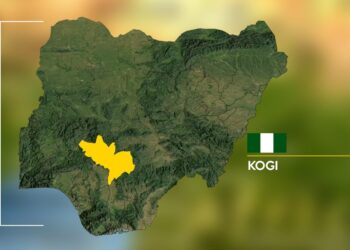
Kebbi State has reached 35 years of statehood, marking three and a half decades of institution-building, political evolution and development in Nigeria’s North-West.
Created from the old Sokoto State on August 27, 1991, Kebbi has grown from a newly established administrative entity into a state with a distinct political identity, a strong agricultural base and an increasingly ambitious development agenda.
Its 35th anniversary is therefore more than a ceremonial milestone. It is an opportunity to reflect on the leaders who helped build the state, the citizens who sustained its growth and the direction being pursued under Governor Nasir Idris, Kauran Gwandu.
Building a State From the Ground Up
When Kebbi State was created in 1991, its first challenge was to establish the basic institutions required to function as a state.
Major General Patrick Aziza, the pioneer administrator, faced the difficult task of assembling the machinery of government, establishing ministries, organising the civil service and developing Birnin Kebbi as the administrative centre of the new state.
These were foundational responsibilities that rarely attract the attention generated by major construction projects, but they provided the institutional platform upon which successive administrations would build.
The early years of Kebbi’s existence were therefore about more than physical development. They were about creating the structures through which government could operate and citizens could begin to identify with a new political community.
Successive Administrations and the Growth of Kebbi
The administrations that followed contributed to Kebbi’s gradual institutional and political consolidation.
Abubakar Musa became the state’s first civilian governor, marking an important transition towards democratic participation in the affairs of the young state. Salihu Tunde Bello, John Ubah and Samaila Bature Chamah subsequently led Kebbi through different phases of its formative years.
The contributions of these administrations are important because development is rarely achieved through one spectacular project or one political tenure. Institutions become stronger through continuity, adaptation and the cumulative work of successive governments.
That same principle remains visible in Kebbi’s present governance landscape, where the administration of Governor Nasir Idris continues to build on policies, institutions and development structures inherited from previous governments.

Aliero and the Era of Democratic Continuity
The return of democratic rule in 1999 ushered in another important phase in Kebbi’s history.
Muhammadu Adamu Aliero became governor and served for eight years, providing a period of political continuity that allowed the state to move beyond some of the immediate challenges associated with its creation.
That continuity helped Kebbi focus increasingly on public services, infrastructure and longer-term development planning.
Saidu Usman Nasamu Dakingari subsequently continued the state’s development trajectory, overseeing a period in which infrastructure and public services remained important components of the state’s development agenda.
Bagudu and Kebbi’s Agricultural Identity
Kebbi’s development story has always been closely connected to agriculture. The state’s fertile land, farming communities and agricultural activities have made it one of Nigeria’s important food-producing states.
During the administration of Abubakar Atiku Bagudu, agriculture remained central to Kebbi’s economic identity, while rural infrastructure also received significant attention.
The state’s agricultural strength remains relevant today because infrastructure and agriculture are closely connected. Farmers require reliable roads to move produce, traders need access to markets and rural communities require public services to support economic activity.
The connection between food production and public welfare remains evident in recent developments. The Bureau Journal reported on the distribution of presidential and Saudi food interventions to vulnerable households in Kebbi, highlighting the continuing importance of food security and social protection in the state.
Nasir Idris and the New Physical Face of Kebbi
Every administration inherits a different set of challenges. For Governor Nasir Idris, one of the defining features of his administration has been the emphasis on visible physical development.
Roads, bridges, public buildings, healthcare facilities and urban renewal projects are among the most immediate ways citizens experience government investment.
Under Idris, Kebbi has embarked on a range of infrastructure and public development initiatives that supporters say are changing the physical appearance of the state.
A recent engagement between the Kebbi State Government and traditional rulers in the Zuru Emirate also highlighted infrastructure as a major component of the administration’s development agenda. The Bureau Journal reported that the Dabai–Mahuta–Koko Road project is expected to strengthen rural connectivity, improve access to markets and stimulate economic activity.
Such projects demonstrate why infrastructure should not be viewed simply as construction. Roads and bridges connect communities, facilitate commerce and improve access to schools, hospitals and markets.
Why Roads Matter to Kebbi’s Development
A state seeking to expand its economy must be physically connected.
Farmers need roads to move agricultural produce. Traders need roads to reach markets. Students need reliable transport routes to access educational institutions. Patients need roads to reach healthcare facilities. Businesses and investors need connectivity to move people and goods.
Infrastructure is therefore closely connected to economic policy. Every major road can potentially become a route for commerce, while every bridge can reduce the physical isolation of communities.
This is particularly important for Kebbi because of its large rural population and agricultural economy.
The state’s development challenge is not simply to build infrastructure but to ensure that infrastructure improves economic opportunity and public services across communities.
Healthcare and Human Development
Physical infrastructure is only one part of development. A state’s long-term progress also depends on the quality of its healthcare, education and human capital.
Kebbi’s healthcare sector remains an important area of government and development-partner intervention. In June, The Bureau Journal reported that UNICEF donated 10,500 cartons of Ready-to-Use Therapeutic Food to Kebbi State to support children suffering from severe acute malnutrition.
The intervention targeted 11 local government areas and involved 61 primary healthcare centres in its first phase.
Such interventions demonstrate that development cannot be measured solely by roads, bridges and government buildings. The health and wellbeing of citizens are equally important indicators of progress.
Strengthening Public Institutions
Institution-building remains another important component of Kebbi’s development journey.
As the state has matured, the focus has increasingly shifted from simply establishing government structures to improving how those institutions function.
The Kebbi State Government recently launched a capacity-building programme focused on treasury operations, financial controls and public records. The Bureau Journal reported that the initiative was designed to strengthen financial management, accountability and institutional record-keeping across government establishments.
Such reforms may not produce the same immediate visibility as a new road or public building, but effective financial management and institutional accountability are essential to sustaining development projects over the long term.
Workers and the Social Dimension of Governance
Government development is also measured by how it affects the people working within and outside the public sector.
In August 2026, The Bureau Journal reported that Governor Nasir Idris pledged to implement any new national minimum wage approved by the Federal Government as the Nigeria Labour Congress began negotiations for a salary increase.
The issue of workers’ welfare is part of the broader economic debate confronting Nigeria, particularly as households continue to deal with rising costs and pressure on purchasing power.
For Kebbi, the challenge is to combine infrastructure development with policies that improve the economic security and quality of life of its citizens.
Security Remains Central to Development
No development agenda can succeed without peace and security.
Kebbi, like other states in Nigeria’s North-West, has faced security challenges that have affected communities, livelihoods and economic activity.
Governor Idris has consequently placed security among the priorities of his administration. The Bureau Journal reported in August that the governor convened an emergency security meeting to review the situation across Kebbi and strengthen coordination among security agencies.
Earlier in June, another emergency meeting was convened following attacks in parts of the state, with the government calling for greater cooperation between residents and security agencies.
The relationship between security and development is straightforward: communities cannot fully benefit from roads, schools, markets or agricultural investments when residents are unable to live and work safely.
Governance as a Relay, Not a Sprint
The history of Kebbi offers an important lesson about development. States are not built within one electoral cycle.
Each administration inherits something from its predecessor and leaves something for the government that follows.
Aziza established the machinery of the new state.
Musa helped open the door to civilian administration.
Successive administrators strengthened the emerging institutions.
Aliero brought democratic continuity.
Dakingari continued the development process.
Bagudu expanded the state’s agricultural and infrastructure focus.
Idris is now seeking to give Kebbi a stronger physical and modern development identity.
Each chapter is incomplete without the others.
The People Are the Foundation of Kebbi
Governors and administrators may occupy the pages of official histories, but the development of Kebbi ultimately rests on its people.
The farmer in Argungu, the trader in Yauri, the teacher in Jega, the civil servant in Birnin Kebbi, the entrepreneur in Zuru and the student preparing for a future not yet imagined are all participants in the state’s journey.
Their labour, enterprise, resilience and patriotism have helped sustain Kebbi through three and a half decades of political and economic change.
Government development projects are meaningful when they improve the opportunities available to these citizens and their communities.
Kebbi at 35: Looking Towards the Next Chapter
At 35, Kebbi is no longer a young state searching for an identity.
It has established a recognisable political and cultural identity, built functioning institutions, developed a strong agricultural reputation and created a foundation upon which future administrations can continue to build.
The next challenge is to turn these foundations into broader and more inclusive prosperity.
That will require continued investment in infrastructure, education, healthcare, agriculture, security, human capital and institutional capacity.
It will also require the people of Kebbi to remain active participants in the state’s development rather than spectators of government programmes.
A New Face for the Land of Equity
Thirty-five years after its creation, Kebbi has travelled a considerable distance.
Its journey has been shaped by successive leaders, public servants, farmers, traders, professionals, traditional institutions, young people and ordinary citizens whose contributions may never appear in official records.
Governor Nasir Idris now occupies another chapter in that continuing story. His administration’s emphasis on infrastructure, healthcare, education, security and institutional development is giving the state a highly visible development agenda.
The ultimate measure of these efforts, however, will be their lasting impact on the lives, livelihoods and opportunities of Kebbi’s people.
For now, the 35th anniversary offers a legitimate moment of reflection and celebration.
Thirty-five years of statehood.
Thirty-five years of institution-building.
Thirty-five years of leadership.
Thirty-five years of an evolving journey towards a greater Kebbi.
Happy anniversary to Kebbi State, the Land of Equity.
Get breaking news and latest updates directly on WhatsApp