Religious endorsement must not replace citizens’ independent judgment ahead of 2027
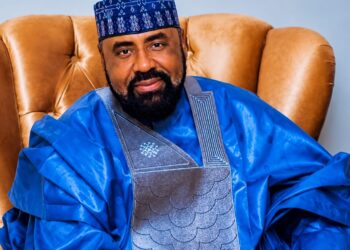
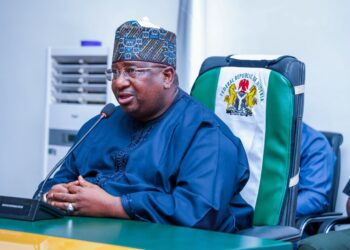
The reported endorsement of President Bola Ahmed Tinubu and Vice President Kashim Shettima by the Jama’atul Izalatul Bid’a Wa Iqamatussunnah (JIBWIS) ahead of the 2027 presidential election has opened another important democratic debate about the role of religious organisations in Nigeria’s politics.
JIBWIS, like every Nigerian organisation and individual, has the right to express political opinions and support candidates of its choice. However, such an endorsement cannot automatically be interpreted as the political position of every Muslim in Nigeria, nor should it be presented as though supporting a particular candidate is a religious obligation.
Recent reports said JIBWIS called on its members to support Tinubu and Shettima at a national symposium in Jos, while Sheikh Muhammad Sani Yahaya Jingir also urged members of the organisation to renew their support for the presidential ticket.
Muslims Have the Right to Make Independent Political Choices
Muslims are not politically homogeneous. They have different political opinions, different experiences and different assessments of government performance.
The same applies to Christians and Nigerians of other faiths. Every eligible citizen has the right to assess political candidates independently and determine who deserves their vote.
That principle is particularly important as Nigeria moves towards the 2027 general elections, which will give voters the opportunity to assess political parties, candidates and competing visions for the country.
2027 Election Should Be About Performance
The 2027 election should therefore be about more than endorsements from influential individuals or religious organisations.
It should be a referendum on the performance, policies, competence and credibility of every candidate seeking the mandate of Nigerians.
If the Tinubu-Shettima administration believes it deserves another term, its supporters should confidently present its achievements before Nigerians and allow citizens to make their own judgment.
The questions Nigerians are asking are straightforward.
What has happened to the purchasing power of ordinary Nigerians? What progress has been made in reducing insecurity? How many sustainable jobs have been created? What is the state of public education and healthcare? How has the government addressed poverty and the rising cost of living? What measurable improvements have Nigerians experienced in infrastructure and economic opportunities?
These questions cannot be answered by political endorsements.
They require evidence.
Religious Leaders Should Encourage Accountability
Religious leaders have an important role to play in democratic societies, but that role should primarily include promoting justice, peace, honesty, accountability and responsible citizenship.
They should encourage citizens to examine candidates critically rather than suggesting that political loyalty is synonymous with religious loyalty.
This is especially relevant as Nigeria’s political landscape becomes increasingly active ahead of 2027, with political parties, candidates and support groups positioning themselves for the next presidential election.
It is important that no Nigerian should be made to feel that disagreeing with a religious leader’s political preference amounts to disrespecting Islam or Islamic scholarship.
That would be dangerous for both religion and democracy.
A Muslim Can Respect a Cleric and Vote Differently
A Muslim can respect Sheikh Sani Yahaya Jingir and still support another presidential candidate.
A Muslim can listen to JIBWIS scholars and independently decide how to vote. Likewise, a Christian or adherent of another faith has an equal right to participate in Nigeria’s democratic process without religious intimidation or political pressure.
The endorsement must therefore be understood as a political position expressed by the organisation and its leadership, rather than an automatic instruction binding every Muslim voter in Nigeria.
JIBWIS itself said in a communiqué issued after its August 2026 symposium that political participation should be guided by peace, integrity, competence, consultation, respect for the Constitution and the common good.
Religious Institutions Must Also Question Those They Support
The endorsement also raises a broader question about the relationship between religious institutions and partisan politics.
When religious organisations openly endorse political candidates, they must also be prepared to subject those candidates to the same moral standards they demand from ordinary citizens.
If a government fails in areas of justice, security, economic welfare or accountability, religious leaders should have the courage to speak against those failures regardless of political affiliation.
Silence in the face of wrongdoing should never become the price of political support.
Nigeria needs religious leaders who can speak truth to power — not simply power to the people.
Let Voters Judge Tinubu’s Performance
President Tinubu and Vice President Shettima are entitled to seek another mandate, and JIBWIS is equally entitled to support them.
Other organisations are also entitled to support other candidates.
But Nigerians must retain the final word.
The administration’s record on economic reforms, security, employment, infrastructure and social welfare should therefore be placed before voters for scrutiny.
The Bureau Journal has previously examined major questions surrounding the administration, including the Tinubu US records case involving the FBI, DEA and DOJ, as well as issues concerning the president’s credentials and the electoral scrutiny surrounding the 2027 contest. These developments demonstrate why voters need access to evidence and competing perspectives before making their choices.
The Ballot Paper Is Not a Religious Verdict
The 2027 election will ultimately not be decided by sermons, symposiums, political rallies or endorsements.
It will be decided by millions of Nigerians who will enter polling booths and make individual choices.
Those choices should be based on conscience, evidence, performance and the national interest.
Political leaders and religious organisations can influence public debate, but they cannot legitimately replace the individual judgment of voters in a democratic society.
The same principle should apply to every candidate and every political party. No religious, ethnic, regional or political group should be treated as possessing the exclusive right to determine how Nigerians should vote.
2027 Should Be a Contest of Ideas and Performance
Rather than asking Nigerians to follow an endorsement blindly, political and religious leaders should encourage citizens to ask difficult questions, compare records, scrutinise promises and make informed decisions.
The 2027 election should be a contest of ideas, competence, character and performance — not a competition over who can attach the strongest religious authority to a political campaign.
The latest APC candidate developments ahead of the 2027 elections are another reminder that Nigerian voters will ultimately have to assess individual candidates and their records, not simply the organisations or political figures supporting them.
Nigerians Should Have the Final Say
Nigeria belongs to all of us.
Religious leaders should guide the conscience of the people, promote peace and encourage responsible citizenship, but the people must ultimately decide who leads them.
Political endorsements are part of democratic debate, but they should never eliminate the citizen’s right to question, compare and choose.
The 2027 election should be decided at the ballot box — not in the mosque, church, palace or political office.
That is where Nigerians should have the final word.
Get breaking news and latest updates directly on WhatsApp