
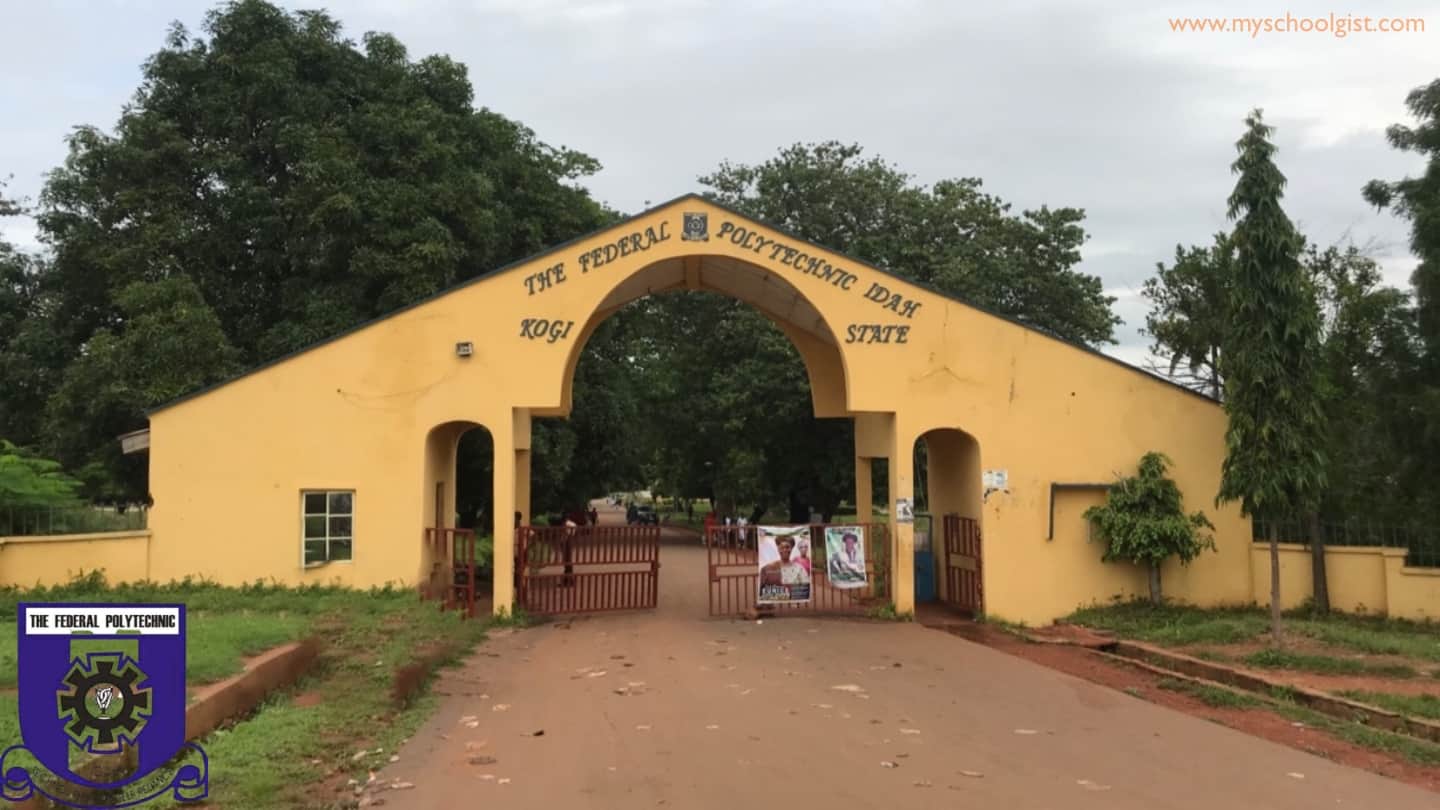
The Federal Polytechnic Idah, Kogi State, has approved registration charges of up to ₦119,200 for the 2026/2027 academic session, prompting concerns about affordability and appeals for management to ease the financial burden on students.
A financial guide accompanying an internal memo dated October 7, 2026, sets charges between ₦98,600 and ₦119,200, depending on students’ programme categories and levels. Acceptance fees and compulsory hostel payments for fresh students are listed separately.
Speaking to The Bureau Journal, a student identified as Miss Naomi expressed concern about the combined cost of registration and accommodation.
“Federal Polytechnic Idah is becoming more expensive. I don’t know if the students’ union representatives will appeal to the school authority to reconsider this increment,” she said.
She also feared that landlords would increase rents on older buildings, adding to students’ expenses beyond the institution’s charges.
What Federal Polytechnic Idah students will pay
The memo, signed by the Registrar, Dr. O. A. Oniyide, states that management approved the financial guide for registration for the new session.
It directs students to comply with the guide and specifies that hostel fees are compulsory for fresh National Diploma and Higher National Diploma students.
| Student category | Approved registration charges |
|---|---|
| ND I Science and others | ₦119,200 |
| ND I BAMS/PUB | ₦110,200 |
| All HND I students | ₦110,200 |
| All ND II and HND II students | ₦98,600 |
The schedule includes a ₦15,000 registration fee, ₦15,000 examination fee, ₦12,000 development fee and ₦25,000 medical fitness screening fee for each category.
Other listed charges cover library services, entrepreneurship development, insurance, sports, portal maintenance, public convenience maintenance and applicable student materials.
Acceptance and hostel fees are additional
Newly admitted ND I students are required to pay a ₦36,000 acceptance fee, while HND I students will pay ₦40,000 before accessing their admission letters online.
The guide also requires new HND I students to obtain a ₦20,000 Polytechnic admission form.
| Additional payment | Amount |
|---|---|
| ND I acceptance fee | ₦36,000 |
| HND I acceptance fee | ₦40,000 |
| Admission form for new HND I students | ₦20,000 |
| Standard hostel accommodation and maintenance per session | ₦20,000 |
| New hostel option: two students per room, including maintenance | ₦60,000 |
| Late registration charge | ₦10,000 |
Standard hostel payment comprises ₦10,000 for accommodation and ₦10,000 for maintenance. The new hostel option costs ₦50,000 per space, plus ₦10,000 maintenance.
Based on the listed charges, an ND I Science student paying acceptance and standard hostel fees would face a combined bill of ₦175,200. An ND I BAMS/PUB student would pay ₦166,200 on the same basis.
For a fresh HND I student, registration, acceptance, the admission form and standard hostel charges together amount to ₦190,200. These calculations exclude late registration and other personal expenses.
Shedrach Idris appeals for review and flexible payments
In an appeal shared with The Bureau Journal, Shedrach Idris urged management to reconsider the charges or introduce measures that would reduce their impact.
He said the reported increase, which he described as coming barely a year after an earlier adjustment, placed additional pressure on students and parents already struggling with household expenses.
“Education should be a bridge to opportunity, not a financial burden that makes the journey unnecessarily difficult,” Idris said.
While acknowledging rising institutional operating costs, he called for adequate notice, transparent explanations, flexible payment arrangements and assistance for disadvantaged students.
“The goal should not be to undermine the institution’s needs but to find a fair balance between its financial sustainability and the welfare of the students it exists to serve,” he said.
The concerns reflect wider household pressures explored in The Bureau Journal’s report on food prices and inflation in Kogi. Education support has also featured in the state government’s approval of bursary payments for students.
Students encouraged to pursue dialogue
Idris urged students to remain committed to their education, engage their representatives and express their concerns peacefully.
He encouraged them to explore legitimate assistance opportunities rather than abandon their studies because of financial difficulties.
“Your education matters, your voice matters, and your future matters,” he said.
The appeal places affordability alongside broader discussions about educational development, including TETFund stakeholder engagement in Lokoja, digital-skills opportunities for Kogi youths and efforts to channel young Nigerians’ ideas into national policy.
The Polytechnic’s memo confirms management’s approval of the new financial guide. It does not set out the previous session’s charges or explain the reasons for the adjustment.


Get breaking news and latest updates directly on WhatsApp