By Suleiman Ramat Ahmad
As Nigeria moves closer to the 2027 general elections, political communication is taking on a role that extends far beyond campaign rallies, television appearances and newspaper headlines.
For President Bola Ahmed Tinubu’s administration and the All Progressives Congress (APC), one of the challenges will be explaining policies, programmes and political messages to millions of Nigerians whose understanding of government is shaped as much by local conversations, radio and social media as by national news platforms.
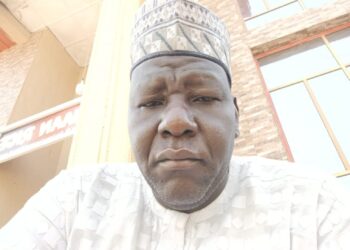
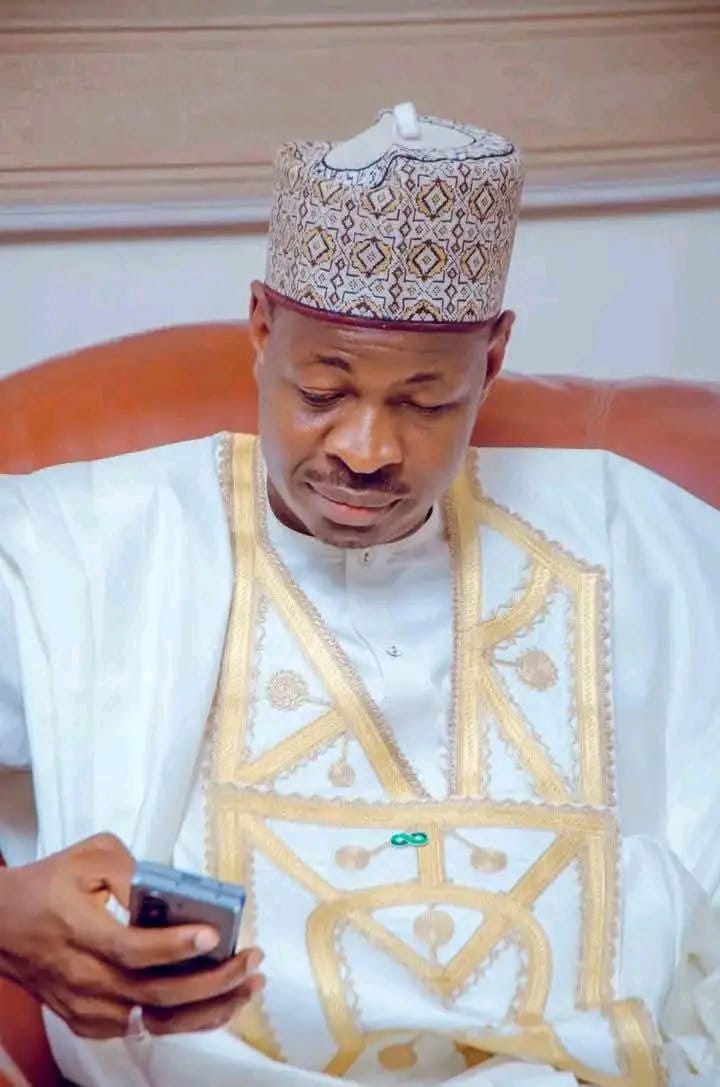
It is within that increasingly complex communication environment that Abdulaziz Abdulaziz has emerged as an important figure.
The journalist, who serves as Senior Special Assistant to President Tinubu on Media and Public Enlightenment, brings to the assignment a career spanning reporting, investigative journalism, editing, broadcasting, digital media and political communication.
His journey is particularly notable because he has moved from covering political events as a journalist to becoming part of the communication machinery responsible for explaining government activities to the public.
Abdulaziz’s professional background includes work with major Nigerian media organisations such as LEADERSHIP, Blueprint, Premium Times and Daily Trust, alongside experience in broadcast and digital journalism.
That experience has exposed him to several sides of the media profession, from gathering and verifying information to editing reports, analysing political developments and communicating directly with audiences.
His involvement in politics is not entirely new. During the 2023 presidential election, he served as Special Assistant on Media and Publicity to the Tinubu-Shettima campaign, working within the communication structure that supported the APC presidential ticket.
That previous campaign experience now provides a useful foundation as political mobilisation around the 2027 election gathers pace. The Bureau Journal’s guide to the 2027 general elections has highlighted the increasingly active political environment, including the positioning of President Tinubu and the emergence of competing opposition structures.
But Abdulaziz’s current role is broader than campaign publicity.
As Senior Special Assistant on Media and Public Enlightenment, his work centres on helping citizens understand government policies and programmes and improving the flow of information between government institutions and the public.
That task becomes more complicated outside Nigeria’s major cities, where citizens may depend heavily on community radio, local leaders, social-media platforms and information shared within their communities.
A policy announced in Abuja does not necessarily become understood in a village simply because it has been reported by national newspapers or television stations. It has to be communicated in language, context and formats that people can relate to.
This is where Abdulaziz’s journalism experience becomes particularly relevant.
In 2026, he unveiled the “Gani Ya Kori Ji” initiative, a Northern Nigeria project-awareness campaign designed to take journalists and other stakeholders to development projects so they could see and report on government interventions directly.
The idea represents a different approach to government communication. Rather than relying solely on official statements, journalists and other participants are given an opportunity to visit projects, observe developments and communicate what they see to the public.
His office has also been associated with efforts to improve the capacity of social-media influencers across Northern Nigeria, including engagement around fact-checking, responsible information dissemination and the fight against misinformation and disinformation.
The emphasis on responsible digital communication is significant at a time when political narratives can spread across WhatsApp, Facebook, TikTok, X and YouTube within minutes.
It also comes against the backdrop of growing scrutiny of political information ahead of 2027. The Bureau Journal has reported on several developments involving Tinubu’s political environment, including the administration’s economic policies and the debates surrounding their impact on ordinary Nigerians.
For a government seeking to communicate its record, the challenge is therefore not simply to produce more information. It is to make that information understandable, credible and accessible to people who may have very different experiences of government.
Abdulaziz is now also positioned to play a role in the APC’s 2027 presidential campaign structure.
According to the source material, he was named one of the Coordinating Secretaries of the Media and Strategic Communication Directorate of the 2027 APC Presidential Campaign Council, alongside Temitope Ajayi, Arabinrin Aderonke and Frederick Nwabufor.
The directorate is headed by senior figures in government and political communication, including Information and National Orientation Minister Mohammed Idris, Dele Alake, Bayo Onanuga and Lanre Issa-Onilu.
His inclusion reflects the importance the campaign structure places on professional communication as it prepares to reach voters across different regions, generations, languages and social groups.
That challenge is particularly important in Northern Nigeria, where political communication often operates through a combination of traditional media, Hausa-language broadcasting, community networks and increasingly influential digital platforms.
Abdulaziz’s experience across these channels gives him an understanding of how political information can move from national institutions to local communities.
It also gives him an appreciation of the difference between simply publishing a government announcement and explaining what that announcement means to the people affected by it.
His investigative journalism background adds another dimension.
Investigative reporting depends on research, verification, evidence gathering and the ability to examine competing accounts before reaching conclusions. Those skills are increasingly valuable in an information environment where political claims, manipulated content and misinformation can quickly become viral.
They do not remove the political nature of campaign communication, but they can help communicators recognise the distinction between political messaging and information that can be independently established.
This distinction will matter increasingly as the 2027 election approaches. The political environment is already being shaped by competing narratives over the economy, security, governance and the performance of the Tinubu administration.
Recent developments, including renewed scrutiny surrounding Tinubu’s US records case, demonstrate how quickly political controversies can become part of the wider national conversation.
At the same time, opposition figures are putting forward competing policy positions, including proposals on fuel, trade and economic management. The Bureau Journal recently examined Atiku Abubakar’s proposed approach to fuel subsidy and domestic refining, illustrating the kind of policy debate likely to feature heavily in the 2027 contest.
For Abdulaziz and other political communicators, the challenge will therefore be to operate in an environment where voters are exposed to competing claims from government, opposition parties, civil society, journalists and social-media personalities.
The real test of grassroots communication will be whether a farmer, trader, student, artisan, civil servant or resident of a rural community can understand what a government policy means for them without having to interpret complicated political language.
That is also why public enlightenment should not be reduced to praise for government.

Effective public communication should give citizens enough information to understand what government is doing, why it is being done and how policies may affect them. Whether citizens ultimately support those policies remains a matter for the electorate.
As the 2027 campaign approaches, this distinction could become increasingly important for the APC. Political mobilisation may require supporters and campaigners, but sustained public communication requires people who understand how information is gathered, verified, packaged and received.
Abdulaziz’s career has taken him through those different stages.
He understands the newsroom, having worked as a reporter and editor. He has experience in investigative journalism, broadcast and digital media. He has previously worked within the Tinubu-Shettima campaign structure, and his current government assignment places public enlightenment at the centre of his responsibilities.
His role in the 2027 APC campaign structure therefore comes at a point when political communication is becoming increasingly decentralised.
The campaign message can no longer remain confined to Abuja, state capitals, major rallies or national television. It has to reach communities where voters experience the consequences of government policy in very practical ways.
That reality makes grassroots communication one of the potentially important battlegrounds of the 2027 election.
The APC is already intensifying its preparations. Recent reports have tracked the party’s emerging 2027 candidate structure, while political groups and support organisations across the country continue to mobilise around President Tinubu.
Ultimately, however, the election will not be determined by communication alone. Voters will judge candidates and parties on their policies, records, promises, organisation and ability to respond to the country’s challenges.
For Abdulaziz Abdulaziz, the assignment represents a notable transition from reporting Nigeria’s political process to helping shape how one of its most powerful political organisations communicates with the public.
Whether that communication can successfully move beyond political elites and reach the communities where millions of Nigerians live may become one of the more important tests of the campaign’s media strategy as the country heads towards 2027.
The Bureau Journal will continue to track the evolving political communication strategies, campaign structures and major issues shaping Nigeria’s 2027 elections.
Get breaking news and latest updates directly on WhatsApp