
Burkina Faso has become one of the most closely watched economic stories in Africa.
Supporters of Captain Ibrahim Traoré point to rising economic output, stronger gold production, improved agricultural performance and a government that has placed economic sovereignty at the centre of its political message. Critics, meanwhile, question how much of the country’s recent performance can be attributed to government policy and how much reflects commodity prices, favourable rainfall and the unusual circumstances surrounding military rule.
Both sides can miss the bigger picture.
The interesting story is not whether Ibrahim Traoré has somehow produced a miraculous 43 per cent expansion of Burkina Faso’s economy. He has not.
The more important question is why the Burkinabè economy has remained resilient despite insecurity, political instability and severe structural constraints, and whether that resilience can be converted into lasting productive capacity.
That distinction matters because a claim that Burkina Faso’s economy has grown by about 43 per cent since Traoré came to power has circulated widely online. The figure is based on an increase in nominal GDP measured in current US dollars, not a 43 per cent increase in real economic output caused by Traoré’s policies.
That is a major difference.
The 43% Figure Needs Serious Context
Burkina Faso’s economy was estimated at roughly $18.8 billion in 2022, while estimates for 2025 put nominal GDP at around $27 billion. That produces a large increase when measured in current US dollars.
But nominal GDP can change because of several factors, including real production, prices, exchange-rate movements and commodity values.
It should therefore not be presented as evidence that Burkina Faso physically expanded by 43 per cent because of one leader’s policies.
The more useful measure is real GDP growth.
And the real numbers are still significant.
The World Bank estimates that Burkina Faso’s real GDP grew by 5.3 per cent in 2025, following growth of 4.8 per cent in 2024. Real GDP per capita also improved, with growth rising from 2.5 per cent in 2024 to 3 per cent in 2025.
Those figures are notable for an economy operating under persistent security pressure.
But they are not 43 per cent.
Correcting that figure does not make Burkina Faso’s economic story less interesting. It makes the story more useful because it shifts attention away from political mythology and towards the economic forces actually driving growth.
Burkina Faso Is Not Growing Because of One Thing
There is no single explanation for Burkina Faso’s recent economic performance.
The World Bank points to several forces working at the same time. Agriculture benefited from favourable rainfall and government support, services remained resilient, mining recovered, and the formalisation of artisanal and semi-mechanised gold mining helped increase recorded production.
The country’s new Mining Code has also changed the policy environment around the sector.
That makes the economic picture more complicated than the simple claim that “Traoré grew the economy by 43 per cent”.
The 2025 figures show contributions from services, agriculture and mining. Services contributed 2.1 percentage points to growth, agriculture contributed 1.7 percentage points and the secondary sector contributed 0.9 percentage points.
Cereal production also increased by 17.6 per cent compared with the previous season.
What emerges is a picture of an economy attempting to keep productive activity going under extraordinary pressure.
Gold Is the Engine. But Gold Cannot Be the Destination
Gold sits at the centre of Burkina Faso’s economic model.
There is nothing inherently wrong with that.
A country with substantial mineral resources should be able to use those resources to generate revenue, foreign exchange, investment and capital for development.
The problem begins when extraction becomes an end in itself.
Burkina Faso’s gold production reached an estimated 94 tonnes in 2025, up from 61 tonnes in 2024. The increase was driven largely by the formalisation of artisanal and semi-mechanised gold mining and the resumption of industrial production.
Higher gold prices have also strengthened the value of exports.
This is where the distinction between resource control and resource transformation becomes important.
A country can capture more revenue from a mine without fundamentally changing its economic structure. It can increase taxation, change mining arrangements and formalise artisanal operations while still exporting a commodity whose deeper value is created elsewhere.
The real economic prize is what happens next.
Can mining revenues finance roads, electricity, irrigation, schools, technical training, manufacturing, agricultural processing and businesses that remain productive after the mineral boom fades?
That is the test.
Africa’s Bigger Problem Is Not a Lack of Resources
Africa’s economic problem has never simply been a shortage of natural resources.
The continent has gold, crude oil, lithium, cobalt, copper, uranium, bauxite, agricultural land, forests, fisheries and enormous renewable-energy potential.
The deeper problem is that too much of the value created from those resources is captured outside Africa.
African countries frequently export raw commodities and import finished or semi-finished products made from those same commodities.
That is why the most interesting part of Burkina Faso’s economic experiment is not simply the rhetoric around sovereignty. It is the emphasis on increasing domestic control over production and economic value.
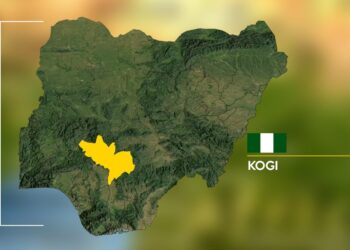
A similar principle is emerging in Nigeria, where governments are increasingly looking at ways to move agricultural commodities from farms into local processing industries. Kogi State’s proposed cashew processing plant, for example, is designed to increase local value addition rather than leave the state dependent on the sale of raw cashew nuts.
The difference between exporting raw cashew and processing it locally is not merely technical.
It is the difference between participating in a commodity market and building a value chain.
The Question After the Mine Is More Important Than the Mine
Imagine Burkina Faso successfully increases gold production and collects substantially more revenue.
What happens to that money?
If it simply finances government consumption, imports and short-term political spending, the economic transformation will remain limited.
If it finances electricity generation, irrigation, industrial parks, transport infrastructure, vocational education, agricultural machinery and domestic businesses, the same mineral wealth can become development capital.
This is one of the hardest decisions facing African governments.
Natural resources can create revenue today. Human capital and productive industries can create income for decades.
A serious development strategy has to use the first to build the second.
Nigeria’s Refining Story Offers a Useful Parallel
There is an obvious parallel with Nigeria.
Nigeria spent decades exporting crude oil while importing large quantities of refined petroleum products. That model created foreign-exchange pressures, exposed consumers to international product prices and left important portions of the petroleum value chain outside domestic processing.
The emergence of large-scale domestic refining capacity is beginning to change that equation.
The Bureau Journal has followed how the Dangote Petroleum Refinery has influenced Nigeria’s downstream market, including its reduction of Jet A1 prices and the wider implications of domestic refining capacity.
The larger lesson is not that one refinery will solve Nigeria’s energy problems.
It is that processing matters.
A country earns more economic value when crude can become refined products, petrochemicals and industrial inputs inside the domestic economy rather than leaving as an unprocessed commodity and returning as a finished product at a higher cost.
The same logic applies to Burkina Faso’s gold.
The ultimate objective should not simply be to dig more gold out of the ground. It should be to ensure that a larger share of the economic activity surrounding that gold, including finance, refining, logistics, equipment, technical services, industrial inputs, skills and downstream activity, is anchored in the Burkinabè economy.
There Is Another Part of the Burkina Faso Story: Fiscal Discipline
One of the less discussed elements of Burkina Faso’s recent performance is fiscal management.
The IMF’s 2026 assessment points to stronger revenue mobilisation and fiscal adjustment alongside the country’s economic improvement, while noting the importance of maintaining fiscal discipline amid security and development pressures.
The important point is not which deficit figure wins an argument on social media.
The important point is that Burkina Faso has been able to combine economic growth with fiscal adjustment.
That matters in a country operating under severe financing constraints.
Fiscal discipline can create room for governments to respond to shocks and reduce the risk that every period of economic stress immediately becomes a financing crisis.
But fiscal discipline by itself is not development.
A government can balance its books and still fail to create enough jobs, productive enterprises and household income.
That is why the next stage of Burkina Faso’s economic strategy matters more than the headline growth rate.
Growth Is Not the Same as Transformation
This may be the most important warning in the entire story.
Burkina Faso’s recent numbers are encouraging, but economic growth does not automatically mean structural transformation.
Gold mining can generate substantial output while creating relatively few jobs. A strong agricultural season can lift GDP without permanently increasing productivity. Higher commodity prices can improve export earnings without creating a diversified industrial base.
GDP measures economic output.
It does not automatically measure the quality of jobs, distribution of income, access to electricity, quality of schools, productivity of small businesses or the resilience of households.
That is why the World Bank’s assessment matters. Burkina Faso needs structural reforms that turn economic resilience into productive jobs and broader economic opportunities.
In other words, growth is only the beginning.
Agriculture Could Become the Real Test
If gold is the engine of Burkina Faso’s current economic performance, agriculture may determine whether that performance becomes socially transformative.
Agriculture employs and supports millions of Africans. It also offers something mining cannot easily provide: extensive opportunities for household-level participation in production, processing, logistics and commerce.
Burkina Faso’s 17.6 per cent increase in cereal production in 2025 therefore deserves attention.
Favourable rainfall played a role, but government agricultural support also contributed.
The challenge is turning one good agricultural season into sustained productivity.
That requires irrigation, improved seeds, storage, rural roads, electricity, mechanisation, affordable credit and access to markets.
Nigeria faces the same challenge across numerous agricultural value chains. The US Embassy’s Freedom 250 agricultural initiative, for example, has brought attention to agricultural technology, livestock development, investment and private-sector partnerships.
The lesson is straightforward: agriculture becomes economically powerful when production is connected to processing, branding, logistics, finance and export markets.
Food Sovereignty Is More Than Banning Imports
The phrase “food sovereignty” has become increasingly popular in African political discourse.
But genuine food sovereignty is much harder than restricting imports.
A country is not food secure merely because it refuses to import food.
It is food secure when farmers can produce competitively, crops can be stored, processors can turn raw produce into affordable food, transport systems can move it efficiently and consumers can obtain it without destroying household purchasing power.
That requires technology, investment, science, functioning markets and infrastructure.
Recent agricultural investment discussions in Nigeria illustrate the same principle. The Green Horizon investment proposal in Jigawa State is built around climate-smart agriculture and Sustainable Aviation Fuel feedstock, connecting agricultural production with emerging industrial markets.
Different countries will pursue different sectors.
The underlying principle remains the same: produce more efficiently and capture more value locally.
Africa Cannot Ignore the Global Value Chain
There is also a danger in interpreting economic sovereignty as economic isolation.
No serious modern economy can build everything it needs internally.
Burkina Faso needs machinery. Nigeria needs technology. Ghana needs capital. South Africa needs international markets. Egypt needs imported inputs.
Every country participates in global supply chains.
The question is not whether Africa should trade with the world.
The question is what Africa receives from that trade and what it contributes to it.
Global goods trade reached about $13.7 trillion in the first half of 2026, according to UNCTAD, with technology, energy-transition products and critical minerals among the areas driving international commerce. The Bureau Journal’s report on the latest global trade figures examines what those shifts could mean for African economies.
Africa’s opportunity is therefore not to withdraw from globalisation.
It is to negotiate a stronger position inside it.
Exporting raw minerals while importing finished batteries is participation.
Exporting crude while importing refined products is participation.
Exporting agricultural commodities while importing processed food is participation.
But it is participation from the weaker end of the value chain.
What Burkina Faso Is Really Testing
This is where the Ibrahim Traoré phenomenon becomes economically interesting without requiring anyone to turn him into a political hero.
Burkina Faso is testing whether a resource-rich, low-income African country can use stronger state intervention, resource control, agricultural support and fiscal discipline to increase domestic economic capacity under extremely difficult circumstances.
Some of those policies may succeed.
Some may fail.
Some of the country’s economic improvement is clearly attributable to factors that have little to do with government decisions, including rainfall, commodity prices and the recovery of particular sectors.
That distinction matters.
Good economic analysis should not confuse correlation with causation simply because a government wants credit for favourable numbers.
At the same time, it would be equally simplistic to pretend policy choices do not matter.
Formalising artisanal mining is a policy decision.
Changing mining rules is a policy decision.
Supporting agriculture is a policy decision.
Controlling public expenditure is a policy decision.
Choosing whether resource revenues finance consumption or productive investment is a policy decision.
The economic debate should focus on which policies are working, why they are working and whether their benefits can survive changes in leadership.
The Political Question Cannot Simply Be Ignored
There is another part of the discussion that cannot be separated from Burkina Faso’s economic story.
The country is governed by a military regime following the coups that brought Traoré to power. Burkina Faso has also left ECOWAS alongside Mali and Niger amid disagreements over the regional bloc’s response to the security crisis.
Economic performance does not erase questions about democratic governance, political freedoms, institutional accountability or the long-term consequences of military rule.
Nor should economic criticism automatically become political condemnation.
The two questions can be examined independently.
A government can implement an economically sensible policy while operating within a political system that raises legitimate governance concerns. Conversely, a democratically elected government can implement poor economic policies.
A serious African debate should be mature enough to hold both ideas at the same time.
Nigeria Has a Similar Choice to Make
Nigeria does not need to copy Burkina Faso’s political system to learn from its economic questions.
The lesson is much broader.
Should government intervention support consumption or production?
Should subsidies simply lower prices temporarily, or should they also build productive capacity?
Should agricultural policy focus on distributing inputs, or on building competitive value chains?
Should mineral resources simply generate royalties, or should they help finance domestic processing?
Should public spending merely circulate through the economy, or should it raise productivity?
These are questions Nigeria is already debating.
The country’s continuing argument over domestic refining is a useful example. The Bureau Journal recently examined Atiku’s proposal to tie government support to domestic refining and production, illustrating the broader debate over whether public intervention should support consumption or productive capacity.
Whether one agrees with that particular proposal is beside the larger point.
There is growing recognition across Africa that public policy should increasingly reward production.
The Next Generation of African Economic Policy Must Be Productive
Africa does not need another decade of political slogans about empowerment without productivity.
It needs factories.
It needs processing plants.
It needs storage facilities.
It needs reliable electricity.
It needs irrigation.
It needs transport infrastructure.
It needs technical workers.
It needs entrepreneurs who can turn local resources into globally competitive products.
And it needs governments capable of creating an environment in which productive investment can survive political cycles.
That is why initiatives aimed at attracting productive investment deserve attention. The Federal Government’s effort to unlock deep-offshore investment in Nigeria, for instance, is designed to attract major capital into the oil and gas sector while increasing economic activity around domestic project execution. The Bureau Journal’s analysis of Nigeria’s $50 billion deep-offshore investment plan examines the potential benefits and the questions surrounding such incentives.
Different countries will pursue different sectors.
The principle, however, is the same.
Produce.
Process.
Capture value.
Reinvest.
Produce again.
Africa Cannot Consume Its Way to Prosperity
One of the continent’s persistent economic weaknesses is the assumption that increasing consumption automatically means increasing prosperity.
It does not.
If a country imports almost everything it consumes, rising consumption can simply increase demand for foreign currency.
If a country produces more domestically, the same increase in consumption can stimulate local businesses, create employment and deepen supply chains.
This is why production is so important.
Burkina Faso’s current economic trajectory raises the question of whether resource revenues and agricultural output can be used to strengthen domestic productive capacity.
Nigeria faces the same question on a much larger scale.
The difference is that Nigeria has a substantially larger domestic market and a broader resource base. Its challenge is therefore not a lack of opportunity. It is converting opportunity into competitive production.
Gold Can Finance Transformation or Become Another Trap
The temptation facing Burkina Faso is obvious.
When gold prices are strong and production increases, government revenues and foreign-exchange earnings can rise quickly.
That creates political room.
But commodity booms are cyclical.
Prices fall.
Mines mature.
Security conditions change.
External demand changes.
Climate shocks can affect agriculture.
The country therefore has to convert temporary resource advantages into permanent productive assets.
That means using today’s revenue to build tomorrow’s capacity.
The same principle applies to Nigeria’s oil revenues, Zambia’s copper, Ghana’s gold, the Democratic Republic of Congo’s cobalt and lithium, Guinea’s bauxite and the continent’s many agricultural commodities.
The resource is not the strategy.
The resource is the capital with which the strategy can be financed.
The Hardest Test for Traoré Has Not Arrived Yet
Burkina Faso’s recent numbers are encouraging.
But the hardest test lies ahead.
Can today’s growth create enough productive jobs?
Can agricultural gains survive a poor rainfall season?
Can gold revenues finance infrastructure rather than merely government consumption?
Can mining reforms create stronger domestic linkages?
Can Burkina Faso expand manufacturing?
Can its private sector become more competitive?
Can economic institutions become strong enough to survive beyond one political leader?
And perhaps most importantly, can the government maintain macroeconomic stability while dealing with enormous security and social pressures?
The World Bank’s assessment is instructive here. It recognises Burkina Faso’s resilience but stresses the need for structural reforms capable of turning that resilience into productive jobs and wider economic opportunities.
That is the distinction between a good economic year and an economic transformation.
The 43% Number Is Actually the Least Interesting Part
The viral 43 per cent figure has attracted attention because it is dramatic.
But dramatic numbers are not necessarily the most important numbers.
The more revealing figures are the 5.3 per cent real GDP growth in 2025, the 94 tonnes of reported gold production, the 17.6 per cent increase in cereal production and the contributions of services, agriculture and mining to overall economic activity.
Together, those figures tell a much richer story.
They show an economy that is not simply dependent on one statistic or one sector.
They also show why attributing every improvement to Traoré personally would be poor economic analysis.
Leadership can establish priorities.
Government can change incentives.
Policy can redirect resources.
But rainfall still falls.
Gold prices still move.
Businesses still make investment decisions.
Workers still determine productivity.
And global markets still influence African economies.
What Africa Should Actually Learn
The lesson from Burkina Faso should not be that every African country needs a military ruler.
That would be an absurd conclusion.
Nor should the lesson be that nationalisation, isolation or resource control automatically produces prosperity.
They do not.
The more defensible lesson is that African economies need to become better at capturing value from what they already produce.
They need to move from raw commodities towards processing.
They need to connect farmers to industries.
They need to use natural-resource revenues to finance productive infrastructure.
They need fiscal systems capable of surviving commodity cycles.
They need policies that encourage domestic investment without shutting out useful foreign capital.
And they need to judge economic success by the productive opportunities created for citizens, not merely by the size of GDP.
That is a lesson Nigeria can understand.
It is a lesson Ghana can understand.
It is a lesson Zambia can understand.
It is a lesson virtually every commodity-dependent African economy can understand.
Final Word: Burkina Faso’s Real Story Is Bigger Than Ibrahim Traoré
Burkina Faso is growing.
The numbers are real.
But the story is more complicated, and ultimately more important, than the internet’s favourite 43 per cent statistic.
The country is benefiting from stronger gold production, high gold prices, agricultural gains, services-sector resilience and fiscal adjustment. Government policies have also influenced the environment in which those gains are taking place.
But economic progress is not the same thing as political mythology.
Ibrahim Traoré did not personally create rainfall. He did not set global gold prices. And he did not single-handedly manufacture every tonne of cereal, every service-sector transaction or every ounce of gold recorded in national statistics.
What a government can do is determine how effectively those favourable conditions are converted into lasting national capacity.
That is where Burkina Faso’s experiment becomes genuinely significant.
If today’s gold revenues become tomorrow’s factories, roads, irrigation systems, skilled workers and competitive businesses, the country will have achieved something much more valuable than a temporary GDP increase.
If agricultural growth becomes a durable food-processing industry, that will matter more than any viral statistic.
If fiscal discipline creates room for productive investment, that will matter more than political slogans.
And if these gains can eventually be embedded in institutions strong enough to survive beyond the tenure of one leader, then Burkina Faso may have achieved the thing Africa has struggled with for decades: turning natural and human resources into durable productive capacity.
That is the real story.
Not 43 per cent.
Not Ibrahim Traoré as a political symbol.
But whether an African country can take what it has, produce more with it, capture more of the value, invest the proceeds wisely and build an economy that is stronger when the current political moment has passed.
That is the question The Bureau Journal believes Africa should be asking.
And it is a question that reaches far beyond Burkina Faso.
Get breaking news and latest updates directly on WhatsApp