The Independent National Electoral Commission (INEC) has outlined its final preparations for the 2027 general elections, announcing plans for 57,000 new voter-accreditation devices, nationwide scrutiny of the voter register and the deployment of more than 100,000 vehicles and 4,000 boats.
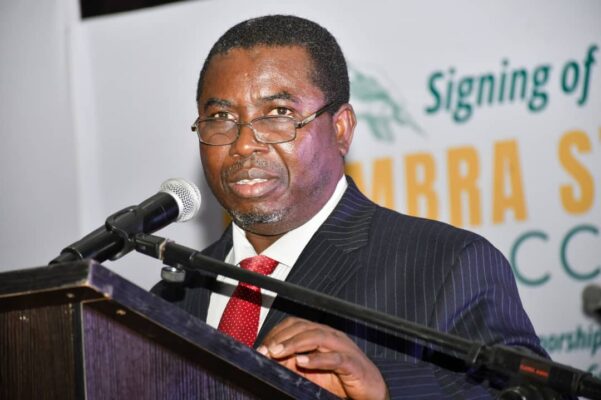
INEC Chairman, Professor Joash Amupitan, SAN, disclosed the measures on Tuesday, October 6, at a World Press Conference and National Stakeholders’ Meeting in Abuja, where he reaffirmed the commission’s commitment to neutrality and credible elections.
He said INEC had moved from planning into execution, with election materials in production, technology undergoing quality checks and personnel receiving training.
“As we begin this 100-day sprint to the 2027 General Election, we reassure the nation and the international community of our total commitment to neutrality, operational excellence, and the sacred integrity of the ballot box,” Amupitan said.
Voter Register Display Begins October 9
Amupitan said the three phases of the Continuous Voter Registration exercise recorded 10,772,421 new registrations, with the updated national register standing at more than 103 million voters.
The register will be displayed for public scrutiny from October 9 to 15, 2026, allowing eligible voters to inspect their details and raise claims or objections.
He said distribution of Phase 1 Permanent Voter Cards to local government centres would begin on October 9.
The collection exercise has already prompted calls for participation, including Admiral Usman Jibrin’s appeal to Nigerians to take PVC collection seriously.
Key Dates and Operational Targets
| Activity | Date or Target |
|---|---|
| Public display of voter register | October 9–15, 2026 |
| Phase 1 PVC distribution to local government centres | From October 9, 2026 |
| Final governorship and State Assembly candidate lists | October 10, 2026 |
| Stress-testing of configured BVAS devices | October 23–28, 2026 |
| Nationwide mock accreditation | November 2026 |
| Ad hoc recruitment deadline | Midnight, November 18, 2026 |
| Presidential and National Assembly elections | January 16, 2027 |
| Governorship and State Assembly elections | February 6, 2027 |
57,000 New BVAS Devices Under Production
Amupitan said production of 57,000 new Bimodal Voter Accreditation System (BVAS) devices was advanced, with some units already delivered.
He said all configured devices would undergo a six-day stress-testing exercise from October 23 to 28, followed by nationwide mock accreditation in November.
The commission has also established an Artificial Intelligence Division within its ICT Department, which he said would operate under mandatory human oversight.
Procurement arrangements for ballot papers and result sheets were nearing completion, he added.
INEC Plans Vehicles, Boats and Earlier Material Delivery
The chairman said INEC had renewed agreements with the National Union of Road Transport Workers, Road Transport Employers Association of Nigeria and Maritime Workers Union of Nigeria to mobilise more than 100,000 vehicles and 4,000 boats.
Under the announced plan, sensitive materials would leave Central Bank of Nigeria vaults for local government areas 72 hours before voting.
Amupitan said materials should reach all 8,838 Registration Area Centres by 4pm on the eve of the election, supporting the commission’s target of opening polling units at 7:30am nationwide.
He acknowledged the release of statutory funding by the Federal Government but requested prompt payment of the outstanding funds to complete preparations.
More Than 707,000 Ad Hoc Personnel Needed Per Election Day
INEC expects to engage 707,384 ad hoc personnel for each of the two election days across 176,846 polling units.
The combined figure represents 1,414,768 engagements across both days, rather than necessarily that number of different individuals.
Applications through INECPRES opened on September 18 and will close at midnight on November 18. The Bureau Journal’s guide to INEC’s 2027 ad hoc staff recruitment explains the available roles and application requirements.
Candidate Lists and Electoral Adjustments
Amupitan said 18 of Nigeria’s 22 registered political parties submitted presidential and vice-presidential candidates, producing 36 names across the two positions.
The final National Assembly candidate list was published on September 12, while the governorship and State Assembly lists are scheduled for October 10.
The preparations also follow constituency changes, including INEC’s restoration of four State Assembly constituencies in Kogi and Delta.
Security Agencies Target Violence and Vote-Buying
Amupitan said INEC would work through the Inter-Agency Consultative Committee on Election Security to train electoral security personnel.
Joint monitoring and undercover teams involving the EFCC, ICPC and Nigerian Financial Intelligence Unit would track vote-buying, he said, warning that offenders would face arrest and prosecution.
Representing the Inspector-General of Police, Assistant Inspector-General Alyonu Francis Idu said clearance operations were underway in Kogi, Niger, Benue and Taraba to stabilise security flashpoints.
The police would review their pre-election operations in November and report to Nigerians by the end of December, he added.
In Kogi, the security concerns arise alongside continuing operations against drugs and illegal weapons. The Bureau Journal has previously reported on the interception of an arms cache in the state.
Amupitan Warns Against Deepfakes and False Results
The INEC chairman warned that generative AI, cloned voices and manipulated videos could be used to fabricate statements by election officials and circulate false result sheets.
He urged media organisations to establish fact-checking desks, verify information with INEC and avoid presenting privately collated figures as official election results.
“In national elections, it is far more important to be right than to be first,” he said.
Amupitan said the Media Accreditation Portal would open before the end of October and encouraged organisations intending to cover the elections to apply early.
Readers seeking broader background on participation and electoral preparations can consult The Bureau Journal’s 2027 elections voters’ guide.
Stakeholders Demand Neutrality and Cooperation
IPAC Chairman, Dr. Yusuf Dantalle, urged INEC officials to remain impartial and called on security agencies to uphold their constitutional responsibilities.
Senator Simon Lalong, Chairman of the Senate Committee on Electoral Matters, said credible elections required cooperation among political parties, security agencies, the media, civil society and voters.
His House of Representatives counterpart, Adebayo Balogun, called for timely enforcement of electoral provisions to reduce avoidable litigation.
European Union Ambassador to Nigeria and ECOWAS, Gautier Mingot, urged stakeholders to support INEC’s work, particularly through adequate funding, and said the EU would deploy an expert electoral mission.
INEC Secretary, Rose Oriaran-Anthony, said the commission would translate stakeholders’ recommendations into operational plans, stressing that the election belonged to Nigerians collectively.
Get breaking news and latest updates directly on WhatsApp