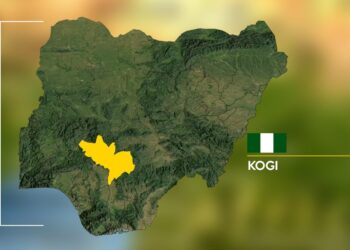

Kogi State had ₦7.60 billion in unspent Universal Basic Education Commission (UBEC) matching grants as of July 2025, according to the commission’s 2025 annual report, raising questions about the utilisation of funds intended to improve basic education.
The figure was contained in a report obtained by The PUNCH, which showed that state governments across Nigeria had a combined ₦264.12 billion in disbursed UBEC matching grants remaining unspent in their accounts at the time of financial monitoring visits conducted on July 21, 2025.
Kogi’s reported balance was among the figures recorded across the North-Central region, alongside Benue, which had ₦19.18 billion; Plateau, ₦6.98 billion; Nasarawa, ₦6.75 billion; and Niger, ₦3.62 billion. The Federal Capital Territory recorded ₦5.67 billion.
The report did not explain why Kogi’s funds remained unspent, identify the projects for which the money had been earmarked or establish whether the balance had changed since the monitoring exercise.

School Infrastructure Needs in Kogi
The reported balance comes amid concerns about the condition of some public schools in Kogi State. Residents of Ejuku, in Yagba East Local Government Area, have called for the rehabilitation of Alalodu Secondary School, which they say has deteriorated after being left in poor condition for more than two years.
In an earlier report, The Bureau Journal reported residents’ appeal for the rehabilitation of Alalodu Secondary School, citing concerns about damaged roofing, crumbling walls and overgrown surroundings. The report did not establish whether UBEC matching grants were intended to fund work at the school.
More broadly, the condition of school buildings is only one aspect of the challenges facing public education. An assessment guide published by The Bureau Journal examined the facilities and basic services needed in Kogi’s public primary schools, including usable classrooms, furniture, water, toilets and access for children with disabilities.
These concerns underline the importance of examining how education funds are planned, released and spent. However, the existence of an unspent balance does not, by itself, establish that the money could have been used for any particular school or that the reported balance caused the problems identified in individual communities.
What the UBEC Matching Grants Are For
UBEC provides federal intervention funding to support basic education, including approved projects involving classroom construction and renovation, learning materials, furniture, sanitation and other improvements to primary and junior secondary schools.
Under the matching grant arrangement, state governments generally provide counterpart funding equivalent to 50 per cent of the relevant project cost and meet the commission’s requirements before accessing the federal contribution.
The grants are intended to share responsibility for basic education financing between federal and state governments. But the balance reported for Kogi relates to funds that had already been disbursed and remained unspent at the time of monitoring. It should not be confused with money a state could not access because it had failed to provide counterpart funding.
Kogi’s implementation arrangements are set out in the state’s guidelines for accessing, disbursing and utilising UBE intervention funds from 2025 to 2030, which outline reporting, procurement, implementation and accountability requirements.
Education Projects and Funding Oversight
The state has pursued other education-related interventions, including secondary school projects under the Adolescent Girls Initiative for Learning and Empowerment (AGILE) programme, supported by the World Bank.
The Bureau Journal previously reported on calls for a more transparent distribution of AGILE-supported school projects across Kogi. That report focused on the allocation of projects and did not establish a connection between the AGILE programme and the ₦7.60 billion in unspent UBEC grants.
Education access also remains a concern for vulnerable children. A separate report by The Bureau Journal documented how financial pressures have contributed to some adolescent girls in Lokoja leaving school to engage in street hawking. The report, Kogi Girls Leave School for Street Hawking, Raising Education Concerns, highlighted the challenges faced by families struggling to meet school-related expenses.
These reports concern different aspects of education in the state. Together, they highlight the need to examine both the availability of funding and whether education interventions are reaching schools and children who need support.
Unspent Balance Requires Further Explanation
The UBEC figures do not establish that the money was stolen or diverted, nor do they identify the administration responsible for the entire balance. Determining accountability would require records showing when each tranche was released, which projects were approved, the expenditure incurred and any outstanding commitments.
It would also be necessary to establish whether contracts had been awarded, work had begun, payments were pending or the funds were subsequently spent, returned or reallocated under the applicable rules.
Without that information, the ₦7.60 billion figure should be treated as a reported balance from the commission’s 2025 monitoring exercise rather than a confirmed statement of the amount currently available to Kogi State.
The Kogi State Government and the State Universal Basic Education Board would need to provide updated financial records to clarify the present position, explain the status of projects linked to the grants and show how the funding has translated into improvements in basic education.
Get breaking news and latest updates directly on WhatsApp