By Abah Benjamin Eneojoh
Government House, Lokoja | October 27, 2026
Kogi State Governor Ahmed Usman Ododo has unveiled project inspection kits produced by the State Ministry of Works, charging engineers, supervisors and other technical personnel to uphold professionalism, accountability, teamwork and safety in the execution and monitoring of public infrastructure projects.
The governor unveiled the kits at Government House in Lokoja on Tuesday, describing the Ministry of Works as central to translating government policies and development plans into infrastructure that directly affects residents.
Ododo said the success of any administration was closely connected to the performance of its infrastructure sector, stressing that engineers and other civil servants had important roles to play in ensuring that public investments delivered their intended benefits.
The state government has outlined several infrastructure and development priorities in recent months. These include projects and policy measures covered in The Bureau Journal’s report on Kogi’s Executive Council approvals for infrastructure, road development and other state projects.
Ododo Urges Engineers to Uphold Professional Standards
The governor expressed appreciation to engineers, accountants, technicians, supervisors and other civil servants for their contributions to Kogi’s development. He said his closer engagement with the workforce since assuming office had strengthened his confidence in their capacity to address the state’s challenges.
He observed that many public servants possessed the knowledge and professional competence required to deliver results but needed an enabling working environment, encouragement and institutional support to perform effectively.
“When you work for the people, you are indirectly working for yourself. When you project your commitment, you are also projecting yourself,” Ododo said, urging public officers to recognise that their contributions to the state’s development would form part of its history.
He called for stronger collaboration between political officeholders and professional civil servants, encouraging engineers to provide technical advice whenever they identified better approaches to project execution.
Ododo said constructive engagement, mutual respect and adherence to due process were essential to preventing avoidable mistakes that could undermine the quality, durability and value of infrastructure projects.
His emphasis on accountability follows an earlier directive to local government leaders to manage public resources transparently and prioritise services for residents. The Bureau Journal reported the charge in its coverage of Ododo’s inauguration of Kogi’s 21 local government chairmen.
Reflective Jackets Introduced for Project Site Visits
Describing the initiative as timely, the governor said Kogi was working to strengthen its development foundation and improve public service delivery. He expressed confidence that a capable workforce, better collaboration and effective supervision would support further progress.
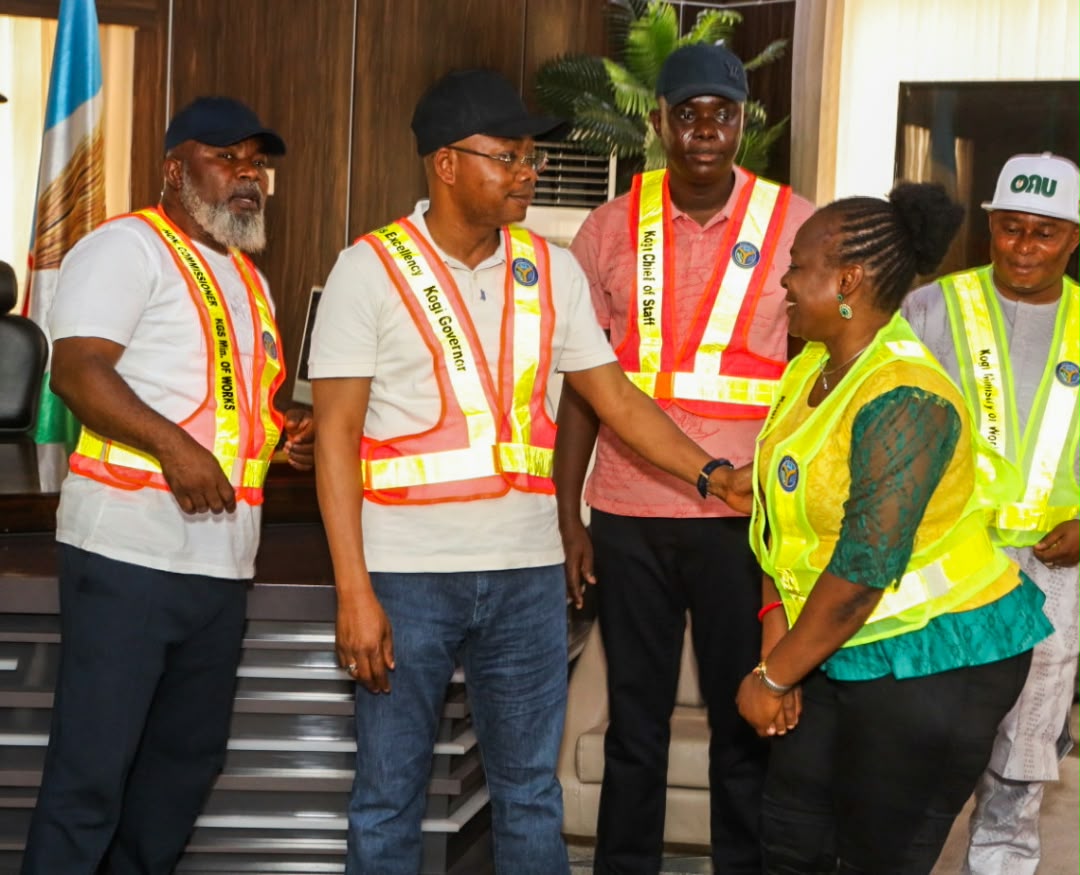
Speaking in his capacity as the state’s Chief Security Officer, Ododo formally unveiled reflective jackets intended to protect engineers and other personnel who routinely visit construction sites.
The kits are also intended to give government inspection teams a recognisable professional identity during site visits, helping distinguish public officials from contractors and other workers at project locations.
The importance of effective infrastructure planning and technical expertise has also featured in the state’s efforts to attract development partnerships. In a related report, The Bureau Journal examined Kogi’s discussions with Kuwait on infrastructure, water, energy and other development priorities.
Works Commissioner Explains Purpose of Inspection Kits
Earlier, the Commissioner for Works, Hon. Barr. Salami Momodu Ozigi Deedat, described the ministry as the hub of infrastructure development in Kogi, noting that the delivery of roads and other public works depended significantly on its effectiveness.
He said the ministry was pursuing the completion of inherited projects alongside ongoing infrastructure interventions, with particular attention to road development and other works intended to improve connectivity and public services across the state.
Deedat explained that the inspection kits were introduced to establish a clear professional identity for government engineers and inspection teams during project site visits.
He said inspection personnel had sometimes relied on arrangements provided by contractors during monitoring exercises. The new kits, he added, would help identify government officials and make their responsibilities more recognisable at construction sites.
Road connectivity remains an important part of the state’s infrastructure agenda. The Bureau Journal has reported on the Abuja–Lokoja–Okene–Benin Highway and other infrastructure projects discussed by the Kogi State Executive Council.
The commissioner encouraged engineers and other relevant personnel to use the kits properly and maintain regular engagement with the ministry’s leadership to strengthen project monitoring and supervision.
He also acknowledged the governor’s interest in the ministry’s activities, saying regular attention to project implementation placed responsibility on officials to remain committed to their duties and maintain the required standards.
Project Supervision and Public Accountability
Project inspection allows technical personnel to observe construction progress, identify potential problems and assess whether work meets approved specifications. The effectiveness of such supervision depends on the competence of inspection teams, access to project information and the proper documentation of findings.
As Kogi pursues development across different sectors, the administration’s approach to infrastructure delivery will also be judged by project quality, completion, durability and the benefits delivered to communities.
Questions about the distribution and oversight of public projects have featured in discussions about development across the state. The Bureau Journal previously reported on calls for transparency and equitable distribution in Kogi’s development projects, highlighting the importance of public confidence in how projects are allocated.
The Ministry of Works is expected to use the inspection kits as part of its efforts to improve the identification and supervision of government personnel assigned to monitor public infrastructure projects.
Get breaking news and latest updates directly on WhatsApp