By Suleiman Ramat Ahmad
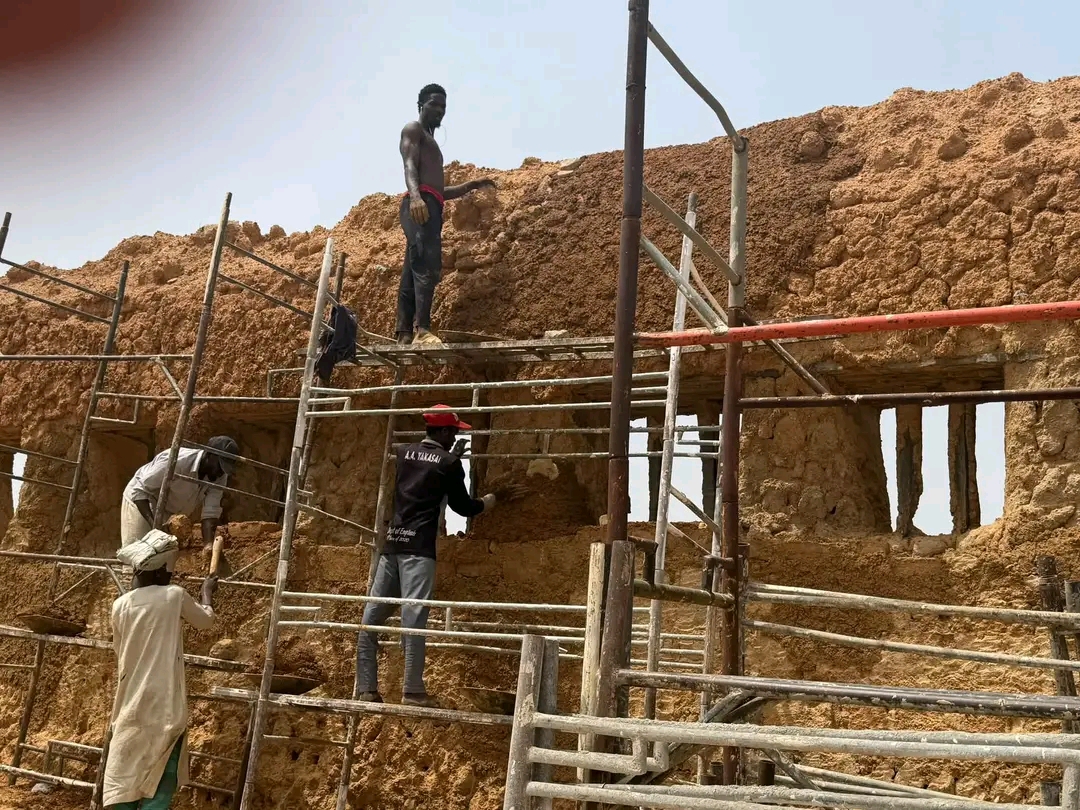
The Kano State Government is reconstructing and repositioning the historic Kofar Dan-Agundi, also known as Dan-Agundi Gate, and part of the adjoining Badala, an ancient city wall, following the construction of the Dan-Agundi major interchange.
The initiative forms part of the state government’s stated commitment to preserving Kano’s historical heritage, traditional architecture and cultural identity while accommodating modern infrastructure development.
The reconstruction is intended to ensure that the interchange project does not erase the historical significance of the gate and its adjoining wall, which form part of the heritage associated with Kano’s ancient walled city.
According to information provided by the state government, the Kano State History and Culture Bureau, led by its Executive Secretary, Arc. Ahmad Abba Yusuf, provided historical guidance during the process to help ensure that the reconstruction reflects the structures’ original character and heritage.
The bureau’s involvement highlights the importance of incorporating historical knowledge and cultural considerations into infrastructure projects, particularly in a city known for its longstanding traditions, historic architecture and commercial significance.
Preserving Kano’s Historical Identity
Kano’s ancient city wall and its gates are important features of the city’s historical development. For generations, the walls and gates helped define the boundaries of the old city, regulate movement and shape the relationship between the historic settlement and surrounding communities.
Beyond their physical function, these structures form part of Kano’s cultural identity and reflect the development of its traditional institutions, commerce and urban life.
The reconstruction of Kofar Dan-Agundi therefore represents an effort to retain a visible connection between the city’s historical past and its contemporary development.
Kano’s cultural heritage is also reflected in its institutions of learning and scholarship. The Bureau Journal previously reported on a public lecture organised by the Aminu Kano College of Islamic and Legal Studies to promote scholarship and cultural learning.
By repositioning the gate alongside modern transport infrastructure, the government seeks to demonstrate that urban development and cultural preservation can proceed together.
History Meets Modern Infrastructure
The construction of the Dan-Agundi major interchange has changed the surrounding infrastructure landscape, creating the need to reposition the historic gate and sections of the adjoining wall.
The government’s intervention seeks to accommodate these changes while maintaining the cultural significance of the historic structures.
The challenge is to ensure that the reconstruction preserves the features that make the gate historically meaningful while allowing it to fit into the modern urban environment.
The wider development of Kano also depends on infrastructure that serves residents’ everyday needs. The Bureau Journal has reported on the state’s efforts to rehabilitate major water facilities in Kano’s drive to expand potable water supply through major infrastructure improvements.
Although water infrastructure and heritage preservation serve different purposes, both illustrate the need to account for the long-term public value of projects as cities develop.
This approach underscores the importance of ensuring that major road projects and other public infrastructure developments take account of historical landmarks, especially in communities where traditional architecture remains an important part of local identity.
Role of the History and Culture Bureau
The involvement of the Kano State History and Culture Bureau is an important aspect of the project because historical reconstruction requires more than rebuilding a structure in its former location or appearance.
Historical guidance can help identify the features that define a monument’s original character and inform decisions about how it should be reconstructed or repositioned.
In this case, the bureau’s role is intended to help ensure that the reconstructed gate retains its historical significance rather than becoming merely a decorative feature of the new interchange.
The initiative also highlights the potential role of cultural institutions in promoting public awareness of historical landmarks and encouraging the preservation of heritage sites for future generations.
Potential Benefits for Tourism and Cultural Education
The preservation of Kofar Dan-Agundi and the adjoining Badala wall could contribute to efforts to promote Kano’s historical heritage, cultural education and tourism.
When properly maintained and accompanied by accurate historical information, restored landmarks can help residents, students, researchers and visitors understand how cities developed and how traditional institutions shaped community life.
The project could also provide an opportunity for the government and relevant cultural institutions to document the gate’s history, explain its significance and encourage greater public interest in the preservation of Kano’s historic sites.
That work would be strengthened by clear information about the gate’s historical origins, the architectural features being retained and the methods used during reconstruction. Public interpretation panels, educational materials and guided visits could also help make the site more useful to residents and visitors.
However, the long-term value of the intervention will depend on the quality of the reconstruction, the protection of historically significant features and regular maintenance of the restored structures.
Balancing Development with Heritage Preservation
The reconstruction of Dan-Agundi Gate reflects a broader challenge facing historic cities: how to accommodate growing transportation and infrastructure needs without losing the landmarks that connect present-day communities to their past.
Kano’s continuing urban development includes projects intended to improve movement and public services. The Bureau Journal has also covered infrastructure initiatives in the state, including road construction, drainage and other development projects discussed in coverage of Kano State.
These projects serve different purposes, but the historic gate reconstruction raises a question that applies to urban planning more broadly: how can new infrastructure meet present-day needs while protecting features that give a city its distinctive identity?
For Kano, preserving the ancient city wall and its gates is an important consideration in maintaining the historical character of the old city amid continuing urban development.
The government’s initiative seeks to address this challenge by integrating a historic landmark into the modern infrastructure surrounding it.
If successfully executed and properly maintained, the reconstructed Kofar Dan-Agundi could serve as a lasting reminder of Kano’s heritage and demonstrate how historical preservation can form part of contemporary urban planning.
The project ultimately highlights the importance of protecting the state’s cultural legacy while adapting its cities to the demands of modern life.
Kano’s wider development priorities also include essential services and urban management. The Bureau Journal’s report on the restoration of dialysis services and approval of new medical equipment in Kano provides further context on the range of public infrastructure and service-delivery issues facing the state.
The reconstruction of Dan-Agundi Gate will ultimately be judged not only by its appearance after the work is completed, but also by whether its historic character is retained and the site is protected for future generations.
Get breaking news and latest updates directly on WhatsApp