
The Kebbi State Government has launched a fresh attack on the African Democratic Congress (ADC) over its recent criticism of Governor Nasir Idris’ administration, accusing the opposition party of presenting political arguments as a financial audit without providing the evidence to support its claims.
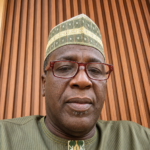
Ibrahim Abubakar Jombali, Special Adviser on Public Enlightenment and Orientation to Governor Nasir Idris, made the argument in a strongly worded response to the ADC Kebbi Campaign Council’s recent statement on the state’s finances and development record.
Jombali described the ADC document as “a political novel with missing chapters”, arguing that its repeated promise to provide “cogent evidence” at a later date undermined its attempt to present the allegations as an immediate assessment of the government’s performance.
Jombali Questions ADC’s ₦627 Billion Calculation
At the centre of the dispute is what the government’s spokesperson described as the ADC’s “₦627 billion question”.
Jombali argued that the opposition’s presentation did not sufficiently distinguish between different categories of government revenue and expenditure, including statutory allocations, local government funds, restricted grants, recurrent obligations, debt-related commitments and capital spending.
He said treating total inflows as though they represented money freely available for discretionary spending amounted to an oversimplification of public finance.
“Numbers stripped of context are not analysis. They are props,” Jombali argued.
He maintained that government revenue cannot simply be equated with money available for unrestricted spending because states have constitutional responsibilities, payroll obligations, infrastructure commitments and social-service costs.
The argument echoes an earlier response from the governor’s camp to criticism of Kebbi’s ₦580 billion 2025 budget, where the administration similarly argued that projected revenue should not be confused with actual funds received.
‘Evidence Cannot Come After the Verdict’
Jombali took particular exception to the ADC Campaign Council’s indication that it would provide evidence for some of its allegations at a later stage.
He argued that an opposition party is entitled to scrutinise government spending, but that serious allegations involving public finances should be supported by documents and verifiable evidence.
According to him, the sequence adopted by the ADC amounted to reaching conclusions first and promising supporting evidence later.
“That sentence is not evidence. It is an admission of its absence,” he wrote, referring to the opposition’s promise to present evidence at an appropriate time.
Jombali said citizens had a right to demand accountability from government, but that the same standard of evidence should apply when opposition parties make allegations about public resources.
Government Says Kebbi’s Challenges Did Not Begin in 2023
The response also challenged the ADC’s attempt to use problems involving schools, hospitals, roads and security as evidence of government failure.
Jombali argued that Kebbi, like other states in Nigeria’s North-West, faces long-standing structural challenges involving insecurity, poverty, infrastructure deficits, climate pressures and agricultural constraints.
He said such problems could not reasonably be presented as though they emerged with the current administration or could be eliminated through campaign promises within a single electoral cycle.
At the same time, he argued that opposition parties should be prepared to subject their own promises to the same scrutiny they apply to the government.
“Apparently, evidence is compulsory for incumbents but optional for aspirants,” he wrote.
His argument comes as the Nasir Idris administration continues efforts to strengthen public financial management. The Bureau Journal recently reported on the state government’s programme to strengthen treasury operations, financial controls and institutional record-keeping.
Jombali Turns the Questions Back on ADC
One of the sharpest sections of the response focused on the ADC’s governorship candidate, Abubakar Chika Malami.
Jombali questioned the opposition campaign’s presentation of Malami as a symbol of accountability and transparency, arguing that his previous years in federal government should also form part of the assessment.
Malami served as Attorney-General of the Federation and Minister of Justice from 2015 to 2022.
Jombali asked why opposition figures who previously held influential positions in government should not also be questioned about the opportunities available to them while they were in office.
“What measurable developmental miracles did Kebbi witness during the years when today’s opposition figures occupied influential positions in federal power?” he asked.
He also questioned what prevented those figures from pursuing some of the solutions they now advocate while they had access to federal authority.
These questions, he argued, should not be viewed as hostility towards opposition politics but as the same accountability standard being applied in both directions.
Accountability Is Legitimate, Government Says
Despite the combative tone of the response, Jombali acknowledged that scrutiny of government is a legitimate part of democratic politics.
He said budgets should be examined, contracts scrutinised and public expenditure subjected to accountability.

His objection, he said, was to presenting political allegations as established financial findings without accompanying evidence.
“Facts deserve better than embellishment. Citizens deserve better than selective arithmetic,” he wrote.
The government has previously defended its financial management by pointing to institutional mechanisms for oversight, including treasury procedures, procurement rules, legislative scrutiny and auditing.
It has also continued to highlight reforms aimed at improving the state’s financial capacity. The Bureau Journal recently reported on Kebbi’s drive to strengthen internally generated revenue as part of the administration’s broader fiscal strategy.
Jombali Defends Nasir Idris’ Development Record
Jombali also rejected the suggestion that the administration’s performance should be assessed solely through the criticisms contained in the ADC statement.
He pointed to rural and urban road projects, schools, healthcare facilities, agricultural interventions, empowerment programmes and human-capital development as areas where he believes the Nasir Idris administration has made measurable progress.
The government has continued to present these interventions as evidence of its development agenda across the state.
For instance, the administration recently received a report from a committee that identified more than 29,000 primary school teachers in Kebbi and proposed measures around salary administration and minimum-wage implementation. The Bureau Journal reported that Governor Idris was reviewing the committee’s recommendations.
Jombali also cited the wider development trajectory of the state, arguing that the administration had made infrastructure and human development central to its governance agenda.
The government’s supporters have similarly pointed to the state’s 35th anniversary as an opportunity to assess the progress made in institution-building, infrastructure and social development. The Bureau Journal examined that broader development record.
Koko-Mahuta-Dabai Road Becomes Part of the Political Argument
Jombali also brought the Koko-Mahuta-Dabai road into the debate, arguing that political figures who previously occupied influential federal positions had opportunities to push for interventions that they are now criticising the state government over.
He contrasted the condition of the route in previous years with the administration’s current infrastructure efforts, although his assessment remains part of the government’s political defence and should not be treated as an independent audit of the road project.
Jombali argued that the wider question for Kebbi voters should be whether current government interventions are producing tangible improvements rather than whether opposition statements generate stronger headlines.
ADC Campaign Faces a Tougher Political Test
The exchange comes as the political contest in Kebbi becomes increasingly active ahead of the 2027 elections.
The ADC is building its campaign around Malami, while the APC is consolidating support behind Governor Nasir Idris. The Bureau Journal recently reported that APC stakeholders backed Governor Idris for another term.
The ADC itself has also faced internal political disagreements. Recent reports have included disputes involving aggrieved aspirants and questions surrounding the party’s internal structures in the state. Those disagreements have already become part of the wider Kebbi political conversation.
The party’s elders have, however, rejected reports of a breakdown between the ADC leadership and Malami’s campaign, insisting that the relationship remains cordial. The Bureau Journal previously reported the ADC Elders Council’s position.
‘A Manuscript in Search of Facts’
Jombali concluded his response by returning to the ADC’s promise to provide evidence for its allegations at a later stage.
Until that evidence is presented, he argued, the opposition’s document should be treated as a political argument rather than a forensic audit or definitive economic assessment.
“Until the promised ‘cogent evidence’ arrives, it remains precisely what it currently is: a manuscript in search of facts,” he wrote.
He also criticised what he described as the opposition’s political rhetoric, accusing the ADC of making promises that should themselves be subjected to scrutiny if the party seeks the confidence of Kebbi voters.
For the Nasir Idris administration, the political calculation is straightforward: the government wants voters to judge its record through projects, policies and measurable outcomes, while the opposition is seeking to make public finance and government performance central issues in the 2027 campaign.
That argument is unlikely to end with this exchange. As the election approaches, Kebbi voters will ultimately have the opportunity to assess both sides not only on the accusations they make, but also on the evidence they present and the credibility of the alternatives they offer.
Get breaking news and latest updates directly on WhatsApp